













![[2 Pack] Coospo Breathable Neck Gaiter Face Scarf Mask COOSPO](http://www.coospo.com/cdn/shop/files/106de7b046babc03aa610173af6e31aa_599da3fe-9907-4b1e-8eb0-f08b3032720b.png?v=1720591174&width=1600)


![[4 Pack] Coospo Soft Breathable Chilly Towel, Microfiber Towel COOSPO](http://www.coospo.com/cdn/shop/files/1_904094cc-62ee-40e9-aa21-415effb385b4.png?v=1720527561&width=1600)

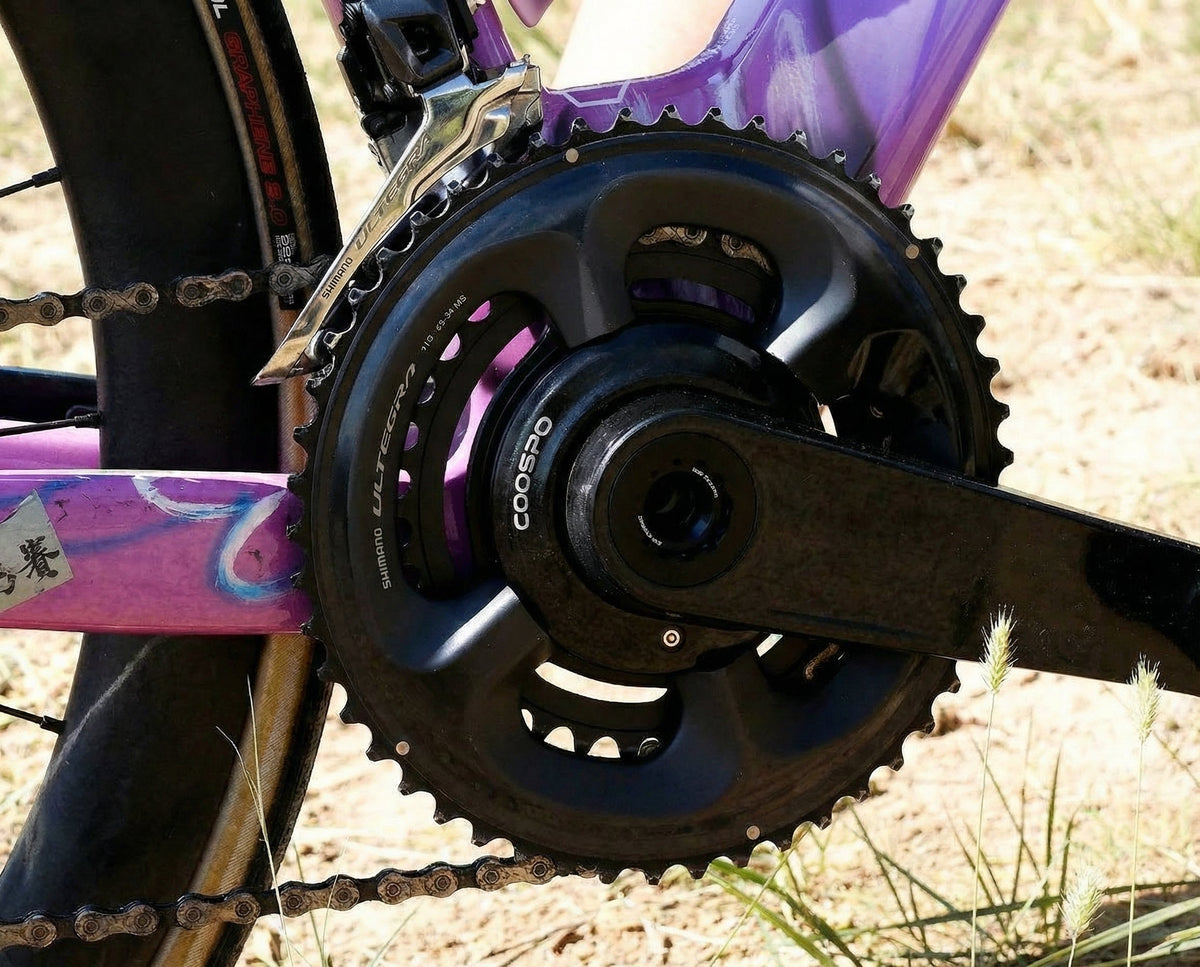
Los potenciómetros han transformado silenciosamente el ciclismo, convirtiéndolo de un arte basado en sensaciones en un deporte repleto de datos donde el esfuerzo se vuelve medible, repetible y entrenable con precisión quirúrgica. Si la frecuencia cardíaca es el eco de la respuesta de tu cuerpo, la potencia es la voz de tu motor hablando en tiempo real.
Pero, ¿qué significa eso realmente para el entrenamiento? ¿Y cómo se convierten esos vatios que marca tu ciclocomputador en mejoras reales del rendimiento, en lugar de simples números que aparecen en una pantalla?
Vamos a analizarlo.
¿Qué es un medidor de potencia?
Un medidor de potencia es un dispositivo que mide el trabajo real que produces en la bicicleta, expresado en vatios. En términos físicos:
Potencia = Fuerza × Velocidad
En el ciclismo, eso se traduce en la fuerza con la que empujas los pedales y la velocidad con la que los giras.
A diferencia de la frecuencia cardíaca, que se ve influenciada por la fatiga, la temperatura, el estrés, la cafeína e incluso la calidad del sueño, la potencia es brutalmente honesta. Te dice exactamente lo que estás haciendo en este preciso instante, no a qué está reaccionando tu cuerpo.
Mientras que los monitores de frecuencia cardíaca registran el esfuerzo relativo y los velocímetros cuantifican los resultados del mismo, los medidores de potencia miden el trabajo real realizado. La misma potencia puede resultar más fácil o más difícil de generar en distintas situaciones, pero 250 vatios son 250 vatios, independientemente de la configuración.
Cómo entrenar con un medidor de potencia
Los potenciómetros ofrecen a los ciclistas dos ventajas clave tanto en competición como en entrenamiento. En primer lugar, permiten monitorizar y ajustar con precisión su rendimiento en tiempo real. En segundo lugar, proporcionan una forma objetiva de evaluar sus capacidades. Con esta información, se pueden perfeccionar y optimizar los programas de entrenamiento, y se puede realizar un seguimiento claro de las mejoras en el rendimiento a lo largo del tiempo.
1. Pruebas FTP
La medida más utilizada para evaluar el rendimiento en ciclismo es el FTP (Umbral de Potencia Funcional), que estima la potencia máxima que un ciclista puede mantener durante aproximadamente una hora. Es un punto de referencia clave en el entrenamiento estructurado.
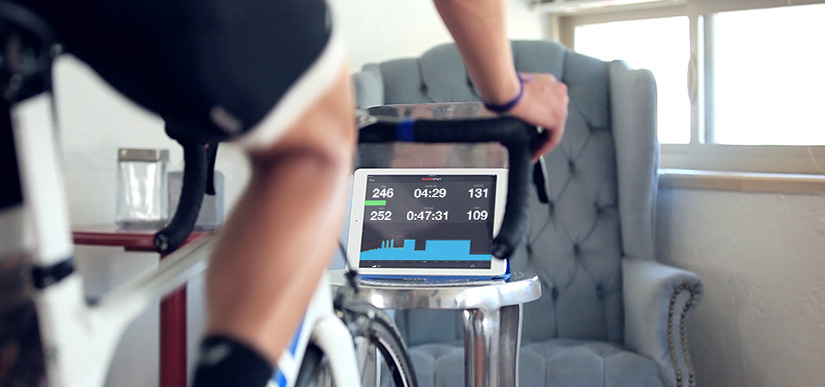
Existen varios protocolos para evaluar el FTP, pero la prueba de rampa suele ser la preferida. En esta prueba, la intensidad comienza muy baja y aumenta gradualmente cada minuto. Los ciclistas mantienen el ritmo hasta que ya no pueden seguirlo, y el FTP se calcula a partir de su nivel de esfuerzo final. En comparación con otros métodos, la prueba de rampa es rápida, relativamente sencilla y no requiere habilidades de control del ritmo. Esto facilita su repetición regular, lo que permite ajustes de entrenamiento más precisos y un mejor seguimiento a largo plazo.
2. Zonas de potencia
Una vez establecido el FTP, las zonas de entrenamiento ayudan a estructurar la intensidad.
Un sistema ampliamente utilizado (basado en el modelo de Coggan) divide el esfuerzo en zonas:
- Zona 1: Recuperación (giro muy suave)
- Zona 2: Resistencia (ritmo de todo el día)
- Zona 3: Ritmo (moderadamente difícil)
- Zona 4: Umbral (cerca del FTP)
- Zona 5: VO₂ máx (muy duro)
- Zona 6+: Esfuerzos anaeróbicos/de sprint
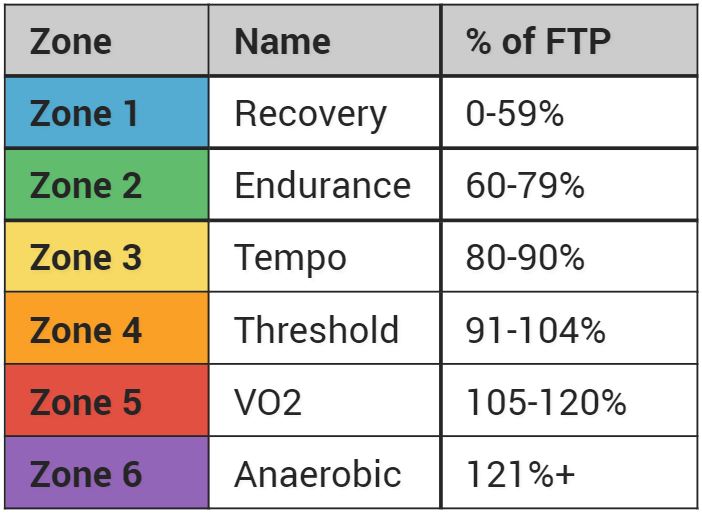
La clave está en el equilibrio. Los ciclistas que solo realizan intervalos intensos suelen estancarse. Los que solo pedalean a ritmo suave rara vez progresan. Las zonas de potencia permiten tanto estructura como variedad.
3. Entrenamiento por intervalos
Es en los intervalos donde el entrenamiento de fuerza se vuelve transformador.
En lugar de esfuerzos vagos como "pedalea fuerte un rato", el poder permite prescripciones precisas como:
4 × 8 minutos al 105% de FTP 6 × 3 minutos al 120% de FTP 2 × 20 minutos en el umbral
Esto elimina la ambigüedad. Tu cuerpo o da en el blanco o no.
Las investigaciones en fisiología de la resistencia respaldan de forma consistente el entrenamiento a intervalos.Estudios realizados por instituciones como la Universidad Noruega de Ciencia y Tecnología han demostrado que el entrenamiento interválico de alta intensidad (HIIT) mejora significativamente el VO₂ máximo y el rendimiento de resistencia en ciclistas entrenados.
Entrenamiento con potencia vs. entrenamiento con frecuencia cardíaca
Antes de que los medidores de potencia asequibles se volvieran accesibles para todos, muchos atletas dependían de los monitores de frecuencia cardíaca para estructurar el entrenamiento por intervalos. En comparación con el entrenamiento basado en potencia, la frecuencia cardíaca presenta varias desventajas. En primer lugar, es una métrica tardía: la frecuencia cardíaca puede tardar varios segundos o incluso minutos en aumentar durante esfuerzos de alta intensidad, mientras que los medidores de potencia responden instantáneamente a los cambios en el esfuerzo. En segundo lugar, la frecuencia cardíaca es muy variable y está influenciada por muchos factores, como la fatiga, la cafeína, las enfermedades, la temperatura, etc. Por lo tanto, alcanzar el mismo objetivo de frecuencia cardíaca no necesariamente refleja la misma intensidad de entrenamiento de un día para otro.
Actualmente, la potencia se considera la forma más eficaz de medir y organizar el entrenamiento. Si bien la frecuencia cardíaca sigue proporcionando información útil, es mejor utilizarla en combinación con la potencia para obtener una comprensión más completa de la carga de entrenamiento y la condición física.
Diferentes opciones de medidores de potencia
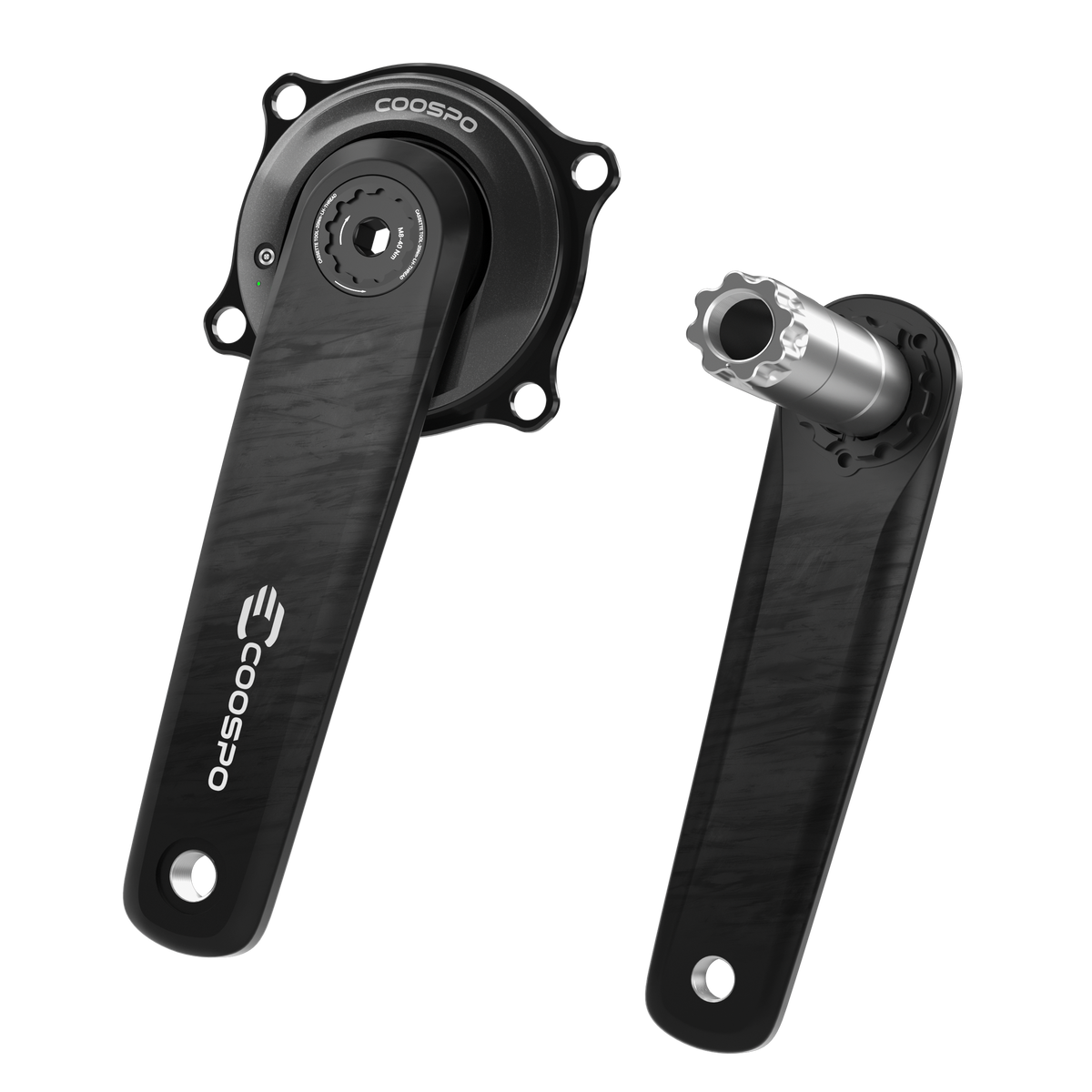
1. Brazo de manivela
Los potenciómetros integrados en las bielas, como Stages, 4iiii y Rotor, suelen medir la potencia de una sola pierna (normalmente la izquierda) y luego duplican ese valor. Son algunos de los potenciómetros más asequibles y utilizados del mercado. Sin embargo, pueden resultar menos prácticos para cambiarlos de bicicleta, y sus bielas ligeramente más anchas pueden causar problemas de ajuste o espacio libre en ciertos cuadros.
2. Araña de manivela
Entre ellos se incluyen Quarq, Power2Max y SRM, que representan la ubicación original de los potenciómetros y siguen siendo ampliamente utilizados hoy en día. Se valoran por su alta precisión, y muchos modelos también pueden estimar el equilibrio entre el pedaleo izquierdo y derecho.
La estructura de un medidor de potencia tipo araña también es importante. En su interior se encuentran sensores de deformación que detectan pequeñas variaciones de fuerza durante el pedaleo. Una estructura más robusta y equilibrada suele proporcionar lecturas más estables.

El Medidor de potencia COOSPO S10 Spider Utiliza una estructura de araña de cuatro vigas con 8 galgas extensométricas para distribuir la fuerza de pedaleo de manera más uniforme. Este diseño ayuda a mejorar la estabilidad y la precisión durante la conducción. Si desea obtener más información sobre la estructura, lea Este artículo.
Una desventaja de los medidores de potencia tipo araña es que no son muy fáciles de cambiar de bicicleta debido a la incompatibilidad con las bielas y el eje de pedalier.
3. Pedal

Los potenciómetros integrados en los pedales se han popularizado cada vez más en los últimos años. Suelen ser fáciles de transferir entre diferentes bicicletas y proporcionan una medición fiable de la potencia entre la pierna izquierda y la derecha. Sin embargo, su compatibilidad con las calas puede ser limitada y, a menudo, tienen un diseño más voluminoso, lo que puede aumentar el riesgo de golpear el suelo al tomar curvas cerradas.
4. Buje trasero

Considerado uno de los potenciómetros más duraderos y precisos, al medir la potencia en la transmisión ofrece una visión más exacta de la energía real que llega a la rueda trasera. Si bien se puede transferir fácilmente entre bicicletas, requiere el uso de una rueda específica, lo que limita su flexibilidad. Esta desventaja ha provocado una disminución en la popularidad de los potenciómetros integrados en el buje en los últimos años. Sin embargo, todavía se utilizan comúnmente en ciclismo en pista y en entrenamientos en interiores.
5. Entrenador inteligente

Las bicicletas estáticas con medición de potencia integrada proporcionan lecturas de vatios muy consistentes, lo que las hace ideales para sesiones de entrenamiento estructuradas.También se pueden conectar a aplicaciones como Zwift o TrainerRoad, lo que ayuda a que los entrenamientos sean más dinámicos y organizados. La principal desventaja es que solo se pueden usar en interiores y que las lecturas de potencia pueden variar ligeramente entre diferentes marcas. A pesar de esto, los rodillos inteligentes siguen siendo populares porque ofrecen una experiencia de entrenamiento sencilla y muy controlada.




Deja un comentario
Este sitio está protegido por hCaptcha y se aplican la Política de privacidad de hCaptcha y los Términos del servicio.