













![[2 Pack] Coospo Breathable Neck Gaiter Face Scarf Mask COOSPO](http://www.coospo.com/cdn/shop/files/106de7b046babc03aa610173af6e31aa_599da3fe-9907-4b1e-8eb0-f08b3032720b.png?v=1720591174&width=1600)


![[4 Pack] Coospo Soft Breathable Chilly Towel, Microfiber Towel COOSPO](http://www.coospo.com/cdn/shop/files/1_904094cc-62ee-40e9-aa21-415effb385b4.png?v=1720527561&width=1600)

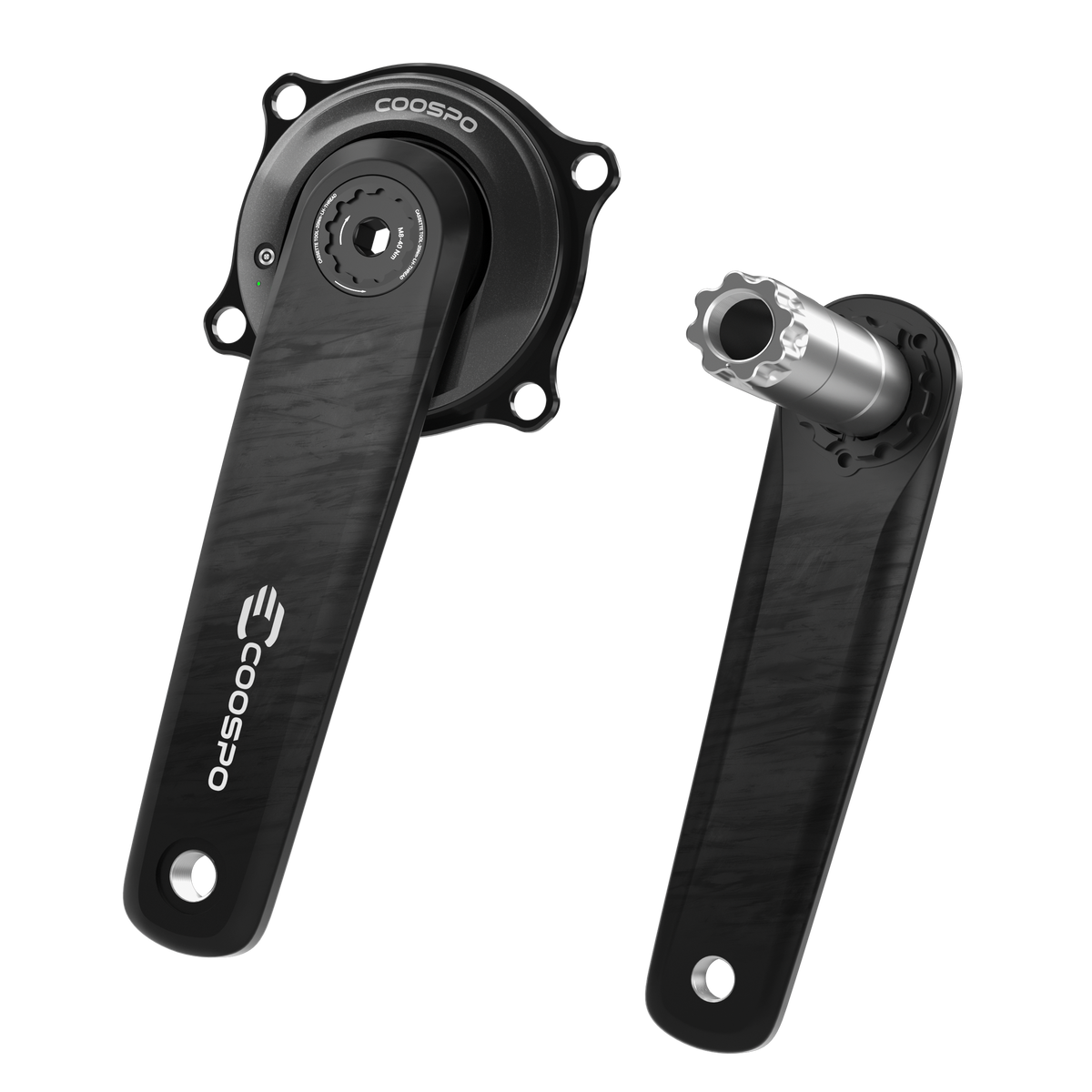
Os medidores de potência vêm em diversos modelos, e os sistemas baseados em aranha são um dos mais utilizados no ciclismo.
Em comparação com medidores de potência baseados em pedais, que medem a força em cada pé, ou sistemas baseados em pedivela unilateral que estimam a potência total de um lado, os medidores de potência baseados no aranha da pedivela medem o torque no aranha da pedivela — a parte central do conjunto de pedivela. Isso significa que eles medem a força rotacional total aplicada à pedivela, em vez de medir cada perna separadamente.

Em termos simples, não mede diretamente a potência de cada perna; em vez disso, mede a força total transferida para a transmissão.
Por isso, os sistemas baseados em aranhas são geralmente conhecidos por um bom equilíbrio entre precisão, estabilidade e custo-benefício, razão pela qual ainda são amplamente utilizados em muitas configurações modernas de medidores de potência focados em desempenho.
Primeiro, dois componentes-chave dentro de um medidor de potência Spider.
Antes de analisarmos os sistemas baseados em aranhas, é importante entender o que realmente faz um medidor de potência "sentir" seu esforço.
O que é um extensômetro?
Um extensômetro é o "nervo sensor" de um medidor de potência.

É um componente extremamente pequeno, mas altamente sensível, geralmente fixado em peças como o pedivela, o aranha ou os pedais — em qualquer lugar onde seja aplicada força.
Sua função é detectar pequenas deformações do material causadas pela força da pedalada.
O princípio de funcionamento é simples: pequena deformação → mudança na resistência → cálculo do torque → potência de saída.
Em outras palavras, cada pedalada que você dá é traduzida em um sinal elétrico que se torna seus dados de potência.
O que é uma estrutura de suporte de carga (viga)?
Se os extensômetros são os "nervos", então a estrutura de suporte de carga é o "esqueleto".
Trata-se de uma estrutura mecânica rígida projetada para suportar a força e o torque da pedalada durante o uso.
Sua principal função é guiar e concentrar toda a força da pedalada em um caminho mecânico controlado.
Sem essa estrutura, o sensor receberia sinais confusos e os dados não seriam estáveis.
1. Núcleo do Medidor de Potência: O Extensômetro
No coração de cada medidor de potência está um componente minúsculo, mas muito importante, chamado extensômetro.
Ele funciona detectando mudanças muito pequenas na forma do metal quando você pedala.
Quando o metal se dobra, mesmo que ligeiramente, sua resistência elétrica muda. O medidor de potência usa essa mudança para calcular o torque e a potência de saída em tempo real.
Os princípios físicos básicos por trás disso podem ser descritos da seguinte forma:
R = ρL/A
Quando o metal é esticado, a resistência aumenta.
Quando comprimido, a resistência diminui.
Ao pressionar para baixo (Fase de potência)
Ao pressionar os pedais, a estrutura do pedivela e do aranha se estica ligeiramente.
Isso causa:
- o metal para esticar
- o extensômetro para deformar
- resistência elétrica para aumentar
- Pedalada mais forte = maior mudança no sinal
- Maior potência de saída exibida em tempo real.
Portanto, quanto mais você se esforça, mais claros se tornam seus dados de potência.
Ao se levantar (Fase de recuperação)
Quando o pé volta a subir, o sistema entra numa fase sem energia.
Neste momento:
- a estrutura relaxa
- a deformação do extensômetro diminui
- quedas de resistência
- A potência de saída cai rapidamente para perto de zero.
Essa é basicamente a fase "sem potência" da pedalada, onde o sistema não contabiliza a força ativa.
2. Estruturas de suporte de carga (Projeto de vigas)
A estrutura de suporte de carga desempenha um papel fundamental na estabilidade de um medidor de energia.
Isso afeta diretamente a precisão com que a força da sua pedalada é registrada.
Em essência, todos os projetos buscam resolver o mesmo problema: como lidar com a força da pedalada de forma estável e reduzir os erros de medição causados pela deformação.
▫️ Projeto de viga única
Esta é a estrutura mais básica.
Utiliza apenas um caminho de força principal.
Pontos principais:
- A força não está distribuída uniformemente.
- controle limitado sobre a deformação
- Os dados podem flutuar com mais facilidade.
Geralmente é encontrado em configurações básicas ou projetos com foco em orçamento limitado.
▫️ Design de feixe duplo
Essa é a estrutura mais comum e amplamente utilizada.
Divide a carga em dois caminhos de força.
Principais melhorias:
- melhor estabilidade
- dados mais consistentes
- bom equilíbrio entre custo e desempenho
É frequentemente considerado o "ponto ideal" para treinos regulares e deslocamentos diários.
▫️ Design de quatro feixes (usado no medidor de potência COOSPO S10 Spider)
Esta é uma estrutura mais avançada e de alta rigidez.
Suas principais vantagens são:
- A força é distribuída por vários pontos.
- melhor resistência à interferência
- caminho de deformação mais controlado
- maior estabilidade e precisão
É comumente utilizado em configurações de treinamento de alta qualidade e sistemas focados em desempenho.
3. Estrutura da aranha no COOSPO S10
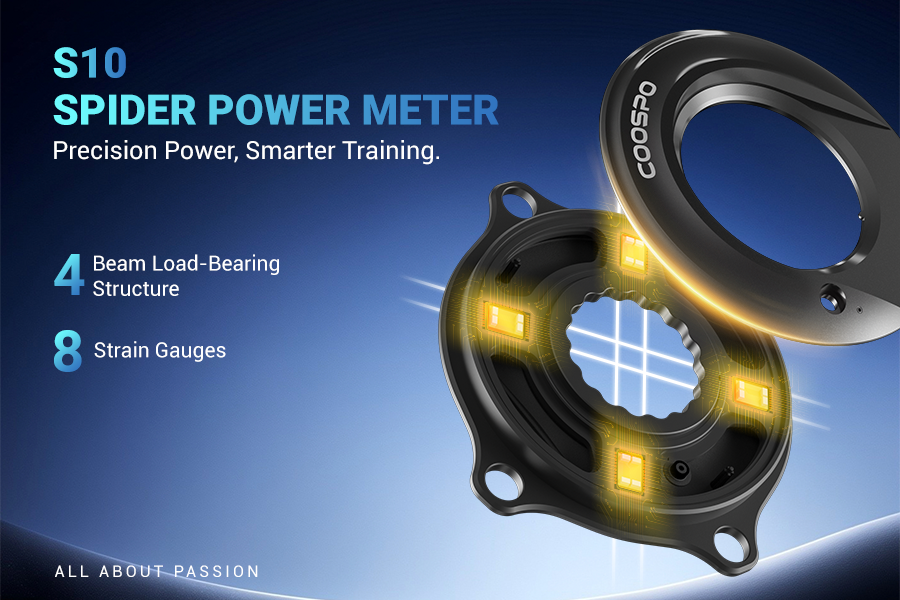
O Medidor de potência COOSPO S10 spider usa um Estrutura de quatro vigas com 8 extensômetros, Oferecendo um design mais avançado dentro dos sistemas de medidores de energia baseados em aranha.

Sua lógica estrutural é simples:
- quatro vigas de suporte de carga dispostas em um layout de simetria cruzada
- Cada viga possui extensômetros em ambos os lados.
- resultando em um total de 8 extensômetros trabalhando em conjunto.
O objetivo desta configuração é:
- capturar força de múltiplas direções ao mesmo tempo
- Cancelar a deriva de temperatura e a interferência externa
- Amplificar sinais úteis para obter maior resolução de medição.
4. Principais vantagens da estrutura COOSPO S10
O valor de um A estrutura de quatro vigas com 8 extensômetros não se destaca apenas pela sua complexidade, mas também pela forma como melhora a estabilidade física da medição de potência.
Em essência, resolve um problema fundamental: como isolar a potência real da pedalada em condições reais de uso.
① Filtragem de ruído, mantendo apenas o torque real da pedalada
Na prática da pilotagem, as forças aplicadas à bicicleta são muito mais complexas do que parecem.
Subidas em pé, balanços laterais, flexão do quadro e pressão axial fazem parte do ciclismo normal, mas nem todos são úteis para a medição de potência.
Essas são consideradas “forças de ruído”.
Com um design simétrico de quatro feixes, o sistema consegue lidar melhor com essas entradas indesejadas:
- Forças vindas de direções opostas se anulam mutuamente.
- As cargas que não envolvem torque são absorvidas pela estrutura.
- Apenas o torque rotacional real é medido.
Ele mede a força que você realmente exerce nos pedais, não o movimento causado pela oscilação do corpo ou pelo movimento da bicicleta.
② Alta estabilidade térmica
Com 8 extensômetros e um design simétrico de quatro vigas, o sistema possui resistência intrínseca a variações de temperatura.
Na prática da pilotagem, a temperatura está sempre mudando:
- Andar de bicicleta em clima frio ou quente
- o sistema aquecendo durante viagens longas
- mudanças rápidas no ambiente
Em muitos medidores de potência básicos, essas mudanças podem causar "deriva", o que significa que o valor da potência se torna gradualmente menos preciso.
Mas com o design do S10, a estrutura simétrica e a configuração de ponte completa ajudam a equilibrar essas mudanças.
Assim, mesmo em percursos longos, os dados de potência permanecem estáveis e consistentes.
③ Saída precisa e consistente
Graças ao seu design estrutural equilibrado, o sistema consegue responder às mudanças de força de forma muito linear.
Isso significa que a força que você aplica e a potência que você vê permanecem intimamente relacionadas.
Não importa como você pilote:
- ciclismo de resistência fácil
- treino de ritmo constante
- esforços intensos de sprint
O resultado permanece muito consistente em todas as intensidades.

Em termos simples, a precisão é suficientemente alta para treinamento sério, com um desempenho em torno de ±1%.
④ Melhor distribuição de carga, maior durabilidade.
As estruturas de múltiplas vigas não se resumem apenas à precisão — elas também melhoram a durabilidade a longo prazo.
- Projetos de viga única → a força é concentrada em um ponto
- Projetos de quatro vigas → a força é distribuída de maneira mais uniforme
Isso leva a:
- muito menos tensão em um único ponto
- redução do risco de fadiga do metal ao longo do tempo
- Perda mais lenta da precisão das medições com o uso prolongado.
Em termos simples, quando a força é melhor distribuída, o sistema dura mais tempo e permanece mais estável.
⑤ Medição com cobertura total de 360°
O design do S10 captura a potência durante toda a pedalada.
Isso significa:
- Mesmo em áreas sem cobertura, o sistema mantém os dados completos.
- O torque máximo não é perdido
- A potência de ambas as pernas, esquerda e direita, é registrada de forma mais completa.
Isso proporciona uma visão mais completa e realista da sua eficiência de pedalada em toda a rotação de 360°.
⑥ Alta qualidade de sinal, forte anti-interferência
Com um circuito de ponte completa e múltiplos extensômetros trabalhando em conjunto, o sistema produz um sinal mais limpo e estável.
Pode reduzir eficazmente a interferência de:
- vibrações da estrada
- flexibilidade da estrutura
- ruído elétrico
- pequenas flutuações durante pedaladas com baixa cadência
Mesmo com baixa potência de saída, os dados permanecem estáveis e fáceis de ler.
Conclusão simples
Se você busca dados de potência para ciclismo estáveis, limpos e altamente precisos, o Medidor de potência COOSPO S10 spider O design é uma das melhores opções disponíveis nos sistemas atuais baseados em aranhas.


Leave a comment
Este site está protegido pela Política de privacidade da hCaptcha e da hCaptcha e aplicam-se os Termos de serviço das mesmas.