













![[2 Pack] Coospo Breathable Neck Gaiter Face Scarf Mask COOSPO](http://www.coospo.com/cdn/shop/files/106de7b046babc03aa610173af6e31aa_599da3fe-9907-4b1e-8eb0-f08b3032720b.png?v=1720591174&width=1600)


![[4 Pack] Coospo Soft Breathable Chilly Towel, Microfiber Towel COOSPO](http://www.coospo.com/cdn/shop/files/1_904094cc-62ee-40e9-aa21-415effb385b4.png?v=1720527561&width=1600)

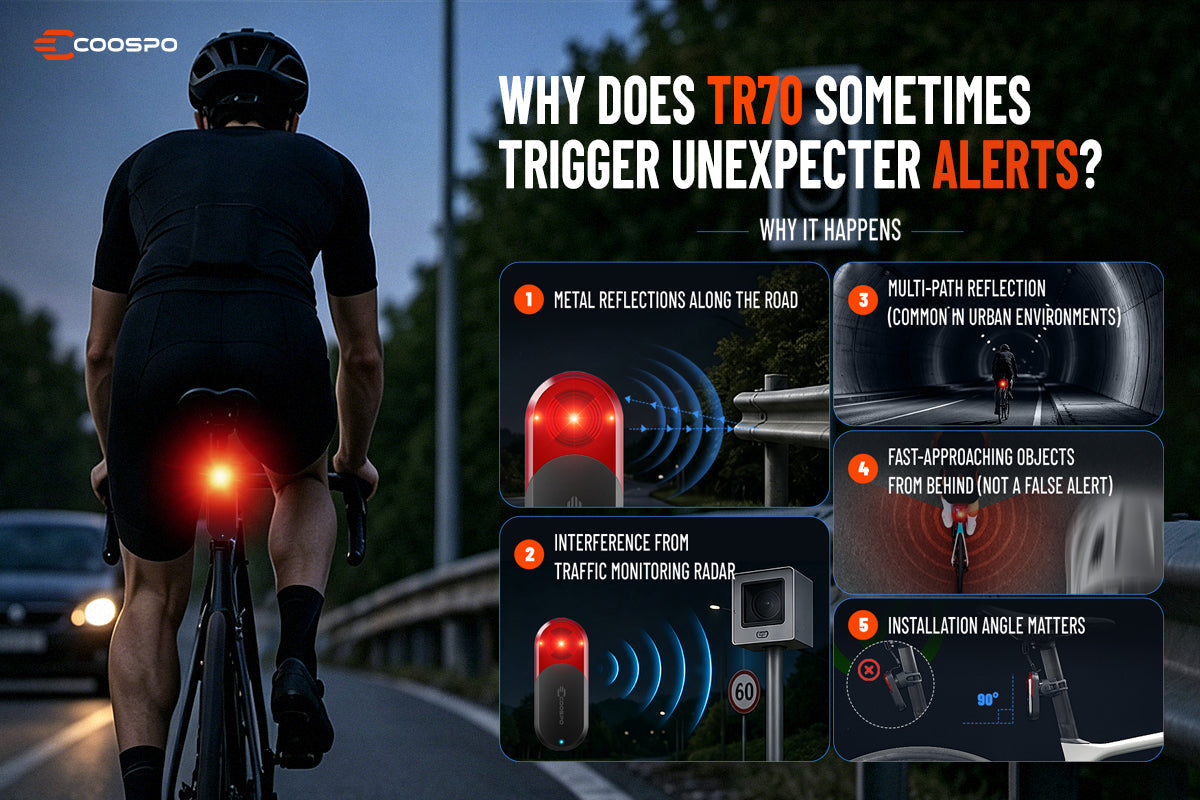
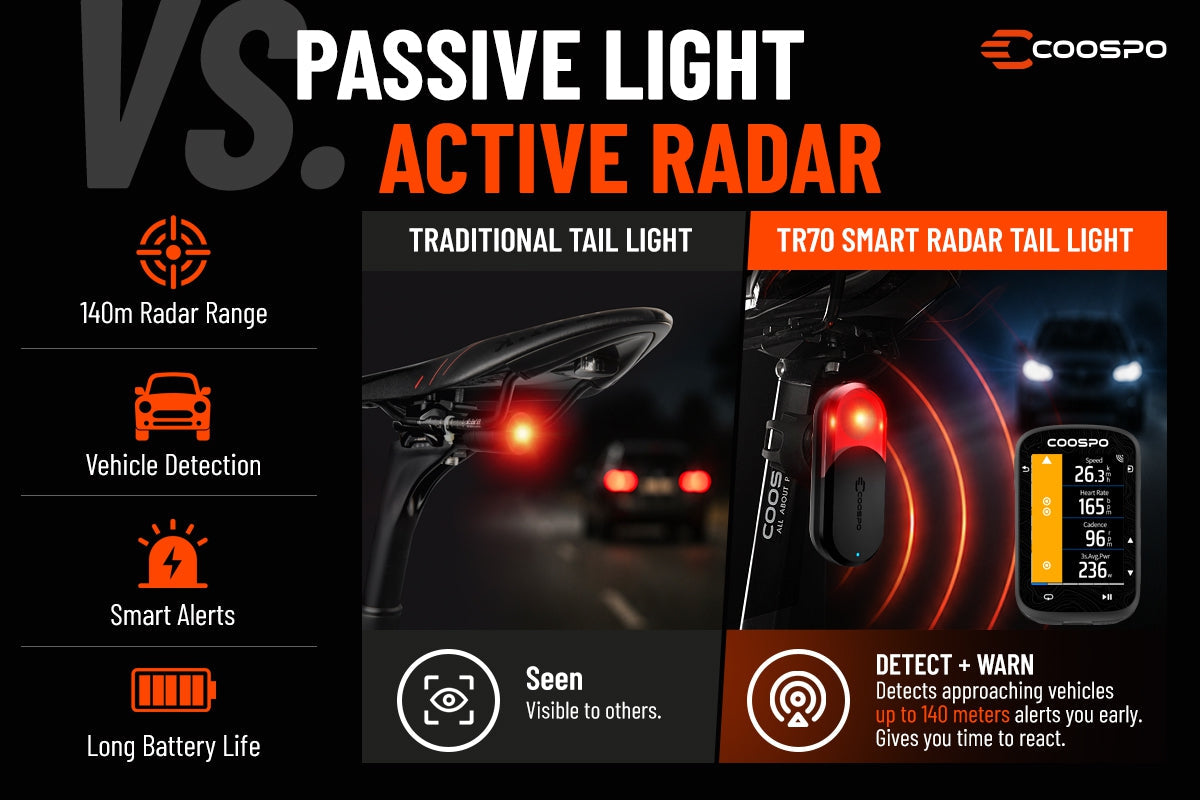
A tecnologia de segurança para ciclistas está evoluindo rapidamente, e luzes traseiras com radar, como a COOSPO TR70 São projetados para dar aos motociclistas uma melhor percepção do que está acontecendo atrás deles.
Recentemente, alguns usuários relataram alertas ocasionais que parecem detectar veículos que se aproximam, O que pode parecer confuso no início. Comportamentos semelhantes podem ocorrer ocasionalmente em outras lanternas traseiras com radar do mercado, incluindo produtos de grandes marcas de ciclismo, porque os sistemas de radar dependem do movimento e da reflexão do sinal, em vez da identificação visual.
Neste artigo, explicaremos:
· Por que isso acontece?
· Se isso é normal
· E como estamos aprimorando isso
Primeiro, eus tIsso é um defeito?
Não, euNa maioria dos ambientes de ciclismo, alertas breves e ocasionais são considerados comportamento normal para sistemas de radar para ciclistas.
Os dispositivos baseados em radar funcionam detectando objetos em movimento e sua velocidade relativa, não por "reconhecer" carros da mesma forma que uma câmera ou um sistema de IA faria.
Isso significa que, em certos ambientes, o radar pode interpretar brevemente sinais que se assemelham à aproximação de veículos.
Com que frequência ocorrem falsos alarmes?
Em condições típicas de condução urbana, a maioria dos utilizadores experiencia de 1 a 3 alertas falsos breves por hora. Em estradas abertas ou perto de grandes guarda-corpos metálicos, este número pode ser ligeiramente superior. Estes alertas costumam durar menos de um segundo e desaparecem espontaneamente.
Motivos comuns para “falsos alertas”
Aqui estão os cenários mais típicos em que isso pode acontecer:
1. Reflexos Metálicos ao Longo da Estrada
Guarda-corpos metálicos, placas de sinalização, carros estacionados ou barreiras de construção podem refletir ondas de radar e disparar um breve alerta. Esta é uma limitação física compartilhada por todas as luzes de bicicleta baseadas em radar no mercado.
Descrição do fenômeno
CQuando um veículo passou em sentido contrário, com defensas metálicas em ambos os lados da estrada, o sinal do radar foi refletido pelas defensas. Como resultado, o ciclocomputador exibiu brevemente um alerta de veículo se aproximando — mesmo que o veículo estivesse vindo na direção oposta. O alerta desapareceu imediatamente após a passagem do veículo.
Esses materiais podem refletir sinais de radar de volta para o dispositivo, criando bloqueios temporários. sinais de detecção. Essa é uma característica conhecida de sistemas de sensoriamento baseados em radar em ambientes complexos.

2.Interferência do radar de monitoramento de tráfego
Alguns radares de fiscalização de trânsito (e.g. , Os radares móveis (câmeras de velocidade, por exemplo) operam em frequências semelhantes. Em casos raríssimos, você pode receber um sinal de alerta. alerta único, em fração de segundo Ao passar diretamente por baixo ou em frente a um deles, o radar recupera a sensibilidade imediatamente após você sair dessa zona.

3. Reflexão de múltiplos caminhos (comum em ambientes urbanos)
Em cidades, túneis ou estradas com edifícios, muros ou muitos obstáculos à beira da estrada, as ondas de radar podem refletir em várias superfícies antes de retornarem ao dispositivo. Isso pode criar uma sinal que aparece brevemente e depois desaparece. Esta é uma característica física da tecnologia de radar e afeta todos os produtos para ciclismo baseados em radar, incluindo as principais marcas.

4. Objetos se aproximando rapidamente por trás (Não é um alarme falso)
Quando uma bicicleta elétrica ou outra bicicleta de estrada se aproxima rapidamente por trás, o TR70 é avisando você corretamente — Isto não é um alarme falso.
5. O ângulo de instalação é importante.
Certifique-se de que o TR70 esteja montado. perpendicular ao solo, Não deve estar apontando para cima nem para baixo. Um ângulo incorreto pode fazer com que o feixe de radar atinja a estrada ou o céu, criando reflexos anormais.

6. Pássaros ou objetos em movimento rápido em áreas abertas
Em ambientes abertos, objetos em movimento rápido ou reflexos incomuns podem ocasionalmente criar anomalias temporárias no radar.
Quando você deve se preocupar?
Exemplo:
Geralmente você não precisa se preocupar se:
· O alerta aparece apenas brevemente.
· Isso ocorre perto de radares de trânsito ou estruturas metálicas.
· O aviso desaparece rapidamente
Entre em contato com o suporte se:
· Os alertas ocorrem continuamente, mesmo sem veículos por perto.
· O radar desconecta-se frequentemente
· A detecção torna-se instável durante a condução normal.
O que nós'O que fazer para melhorar isso
Na COOSPO, levamos o feedback dos usuários a sério.
Nosso teestou trabalhando ativamente em:
· Melhorando algoritmos de filtragem de sinal
· Aprimorando lógica de reconhecimento de objetos
· Reduzir a sensibilidade à interferência ambiental
As futuras atualizações de firmware continuarão a... Reduzir alertas falsos e melhorar a estabilidade..
O que você pode fazer
Para obter a melhor experiência:
Instale o dispositivo corretamente (alinhamento vertical).
Não se preocupe com alertas breves e isolados.
Concentre-se em sinais de aproximação consistentes
Mantenha o firmware atualizado (quando disponível).
Considerações finais
A tecnologia de radar não é perfeita.,Mas é uma das ferramentas mais eficazes disponíveis atualmente para melhorar a segurança no ciclismo.
Oalertas falsos ocasionais são um compensação para alta sensibilidade, o que ajuda a garantire você não deixa passar ameaças reais vindas de trás. Para garantir a segurança dos motociclistas, os sistemas de radar são projetados intencionalmente para priorizar a sensibilidade de detecção.
Reduzir a sensibilidade de forma muito agressiva pode diminuir os falsos alarmes, mas também pode aumentar o risco de não detectar veículos que se aproximam rapidamente.
Esse equilíbrio é algo que todos os sistemas de radar para ciclismo otimizam continuamente.
Agradecemos muito o seu feedback — ele nos ajuda a criar produtos melhores para ciclistas do mundo todo.
Perguntas frequentes
O TR70 detecta carros à minha frente?
Não. O radar foi projetado para monitorar objetos que se aproximam por trás.
As condições meteorológicas podem afetar a detecção por radar?
Chuvas fortes ou reflexões ambientais densas podem afetar ligeiramente o comportamento do radar.
As atualizações de firmware irão melhorar a redução de falsos alarmes?
Sim. Otimizamos continuamente a filtragem e a estabilidade do radar por meio de melhorias no firmware.



1 comment
Dan
I just purchased the radar. It does well with cars. Doesn’t seem to pick up bikes at all. Is there plans to fix that or it more for vehicles.
Leave a comment
Este site está protegido pela Política de privacidade da hCaptcha e da hCaptcha e aplicam-se os Termos de serviço das mesmas.