













![[2 Pack] Coospo Breathable Neck Gaiter Face Scarf Mask COOSPO](http://www.coospo.com/cdn/shop/files/106de7b046babc03aa610173af6e31aa_599da3fe-9907-4b1e-8eb0-f08b3032720b.png?v=1720591174&width=1600)


![[4 Pack] Coospo Soft Breathable Chilly Towel, Microfiber Towel COOSPO](http://www.coospo.com/cdn/shop/files/1_904094cc-62ee-40e9-aa21-415effb385b4.png?v=1720527561&width=1600)

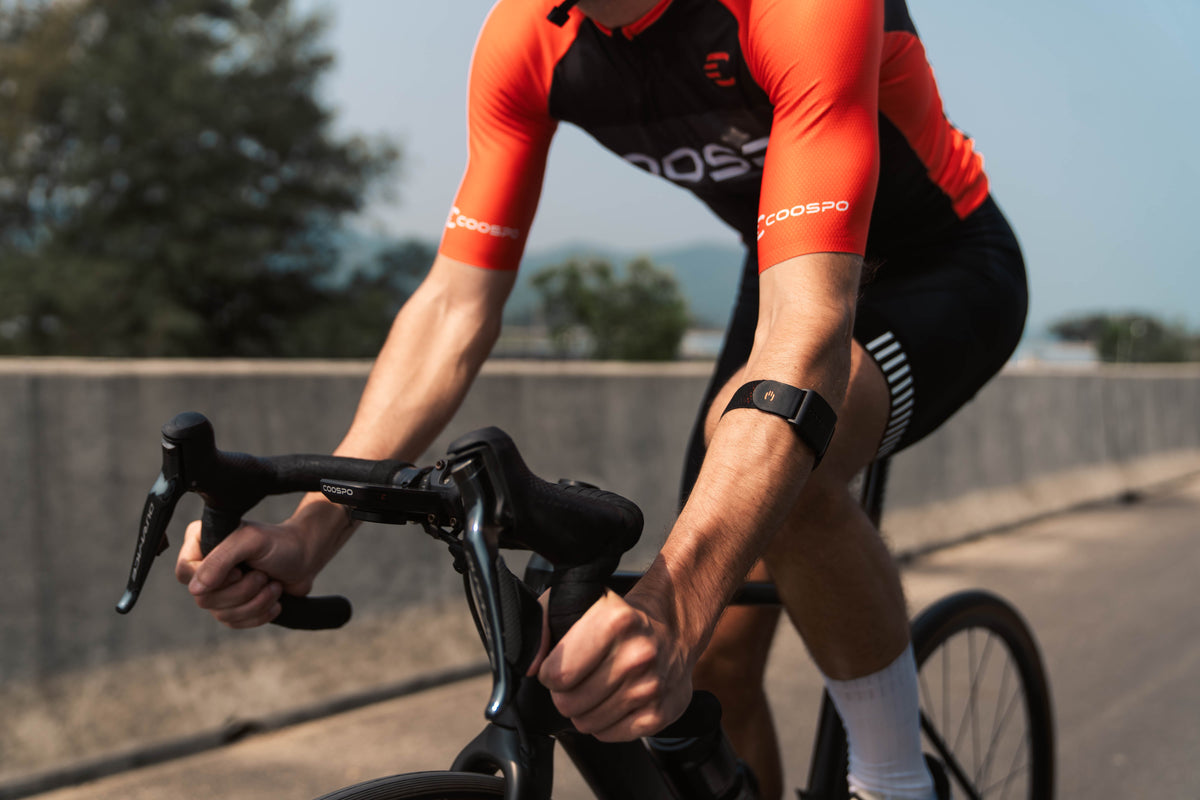
La variabilité de la fréquence cardiaque est un indicateur permettant d'évaluer l'état général d'un athlète, de sa condition physique à sa santé. Elle permet de déterminer s'il est opportun de s'entraîner intensément, de participer à une compétition ou, au contraire, de se reposer.

Il est fort probable que les passionnés de cyclisme, notamment ceux qui s'intéressent particulièrement à l'entraînement et à la forme physique, connaissent le terme « variabilité de la fréquence cardiaque » (VFC), ou son acronyme anglais. Cependant, nombreux sont ceux qui ne comprennent pas encore pleinement ce que ce terme signifie, ce qu'il représente, ni ses applications pratiques dans l'entraînement cycliste. C'est pourquoi nous avons décidé d'aborder ce sujet.
1. Un peu d'histoire
Les premières études sur la variabilité de la fréquence cardiaque remontent aux années 1960. Il s'agissait de tests pilotes menés auprès de cosmonautes soviétiques pour observer comment ils s'adaptaient aux changements des conditions atmosphériques et aux autres défis qu'ils pourraient rencontrer dans l'espace.
Des années plus tard, cet intérêt pour la mesure de l'adaptation humaine à différents stimuli s'est étendu au sport. La variabilité de la fréquence cardiaque (VFC) est devenue un nouveau paramètre étudié de près par les médecins du sport et les entraîneurs, car des recherches antérieures avaient démontré un lien étroit entre les variations de la VFC et la condition physique et la santé de l'athlète.
Polar, entreprise pionnière dans le domaine des moniteurs de fréquence cardiaque, a été la première à intégrer la mesure de la variabilité de la fréquence cardiaque dans ses appareils. Cela a ouvert la voie à des informations auparavant réservées à la recherche médicale.
Aujourd'hui, d'innombrables applications et appareils permettent de surveiller la variabilité de la fréquence cardiaque, de générer des rapports et des courbes de tendance, et sont accessibles à tous. La VFC est devenue ces dernières années l'un des outils les plus répandus et les plus populaires pour le suivi de la condition physique générale des athlètes de haut niveau.
2. Ce que cela signifie réellement
De manière générale, la variabilité de la fréquence cardiaque (VFC) désigne la régularité de notre rythme cardiaque. Cette régularité est mesurée par l'intervalle de temps, en millisecondes, entre chaque battement cardiaque. Plus précisément, elle est mesurée entre les ondes R de chaque battement, qui font partie des ondes enregistrées sur un électrocardiogramme (ECG).
-
Lorsque l'intervalle entre les ondes R — ou simplement entre les battements — est très constant et similaire, la VFC est considérée comme faible.
-
Lorsque l'intervalle entre les battements varie et est moins stable, la VFC est considérée comme élevée.

En résumé, la VFC reflète la régularité de nos battements cardiaques.
3. Ce dont cela dépend
Pour comprendre les facteurs qui influencent la variabilité de la fréquence cardiaque, il est nécessaire de connaître les mécanismes sous-jacents. La fréquence cardiaque, ou le rythme de notre cœur, est régulée par le système nerveux autonome, qui contrôle toutes les fonctions involontaires de notre organisme, telles que la digestion, la température corporelle, la distribution du flux sanguin et bien d'autres.
Le système nerveux autonome comporte deux branches : le système sympathique et le système parasympathique, qui ont des fonctions opposées et s’inhibent mutuellement.
-
Le système sympathique Il accélère les processus de libération d'énergie et est associé à la vigilance et à la fatigue.
-
Le système parasympathique Elle favorise la conservation de l'énergie, soutient la récupération et prépare le corps à l'effort physique.
4. Comment le système nerveux influence la VFC
Lorsque l'activité sympathique domine, la glycémie et le taux de cortisol augmentent, l'inflammation s'accroît et le rythme cardiaque s'accélère, mais la variabilité de la fréquence cardiaque diminue, ce qui signifie que le rythme cardiaque devient plus stable entre les battements.
À l'inverse, l'activation parasympathique produit l'effet inverse : elle abaisse la glycémie, réduit la pression artérielle et la fréquence cardiaque, et favorise généralement la récupération. Concernant la variabilité de la fréquence cardiaque, la dominance parasympathique tend à l'accroître, rendant ainsi le pouls plus irrégulier d'un battement à l'autre.
De ce fait, de faibles valeurs de VFC sont souvent associées à des situations peu propices à une performance optimale, qu'elles soient dues à la fatigue, au stress physique ou mental, ou à des troubles émotionnels, la VFC étant étroitement liée au système nerveux. Le stress émotionnel peut également affecter la VFC.
Il est fréquent d'observer une faible VFC après des séances d'entraînement ou des compétitions intenses, pendant des périodes d'entraînement très exigeantes, en cas de maladie ou dans des situations émotionnellement stressantes.
Une tendance à la baisse de la VFC peut indiquer un surentraînement.
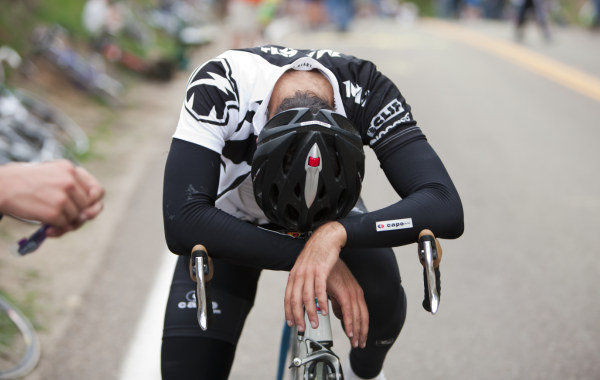
En revanche, des valeurs élevées de VFC sont associées à des périodes où l'athlète est dans une condition optimale, reconstitue ses réserves d'énergie, régénère ses tissus musculaires et bénéficie d'une activité hormonale anabolisante, autant d'éléments qui favorisent une bonne performance.





1 commentaire
Renata Borges de Oliveira Marinho
Laisser un commentaire
Ce site est protégé par hCaptcha, et la Politique de confidentialité et les Conditions de service de hCaptcha s’appliquent.