















![[2 Pack] Coospo Breathable Neck Gaiter Face Scarf Mask COOSPO](http://www.coospo.com/cdn/shop/files/106de7b046babc03aa610173af6e31aa_599da3fe-9907-4b1e-8eb0-f08b3032720b.png?v=1720591174&width=1600)


![[4 Pack] Coospo Soft Breathable Chilly Towel, Microfiber Towel COOSPO](http://www.coospo.com/cdn/shop/files/1_904094cc-62ee-40e9-aa21-415effb385b4.png?v=1720527561&width=1600)


Hay muchas maneras de saber si estás mejorando como corredor. Puedes fijarte en lo cansado que te sientes, en tu ritmo respiratorio o en la cantidad de entrenamiento que realizas. Pero la mayoría se centra en el ritmo. Correr más rápido es una meta fundamental para los corredores, pero no siempre es fácil.
Las investigaciones incluso muestran que volverse más rápido puede ser complicado para nuestros cuerpos. Un estudio en la revista Celúla Se analizaron aproximadamente 37.000 carreras registradas con dispositivos de seguimiento de actividad física. Los investigadores querían observar cómo los corredores eligen su velocidad para diferentes distancias y si esa velocidad resulta eficiente en términos de energía.
Descubrieron que, al igual que otros animales, los humanos corren naturalmente a un ritmo que ahorra energía. Las personas tienden a mantener esta velocidad cómoda sin importar la distancia que corran. Desde una perspectiva evolutiva, tiene sentido: estamos diseñados para usar la menor cantidad de energía posible al movernos, dice Jessica Selinger. Ph.D. , Experto en biomecánica y control motor en la Universidad Queen's de Canadá.
Pero hay maneras de engañar un poco a tu cuerpo. Por ejemplo, Selinger sugiere escuchar música con un ritmo más rápido, lo que puede acelerar tus pasos. Correr con amigos que sean más rápidos que tú también puede motivarte a aumentar la velocidad.
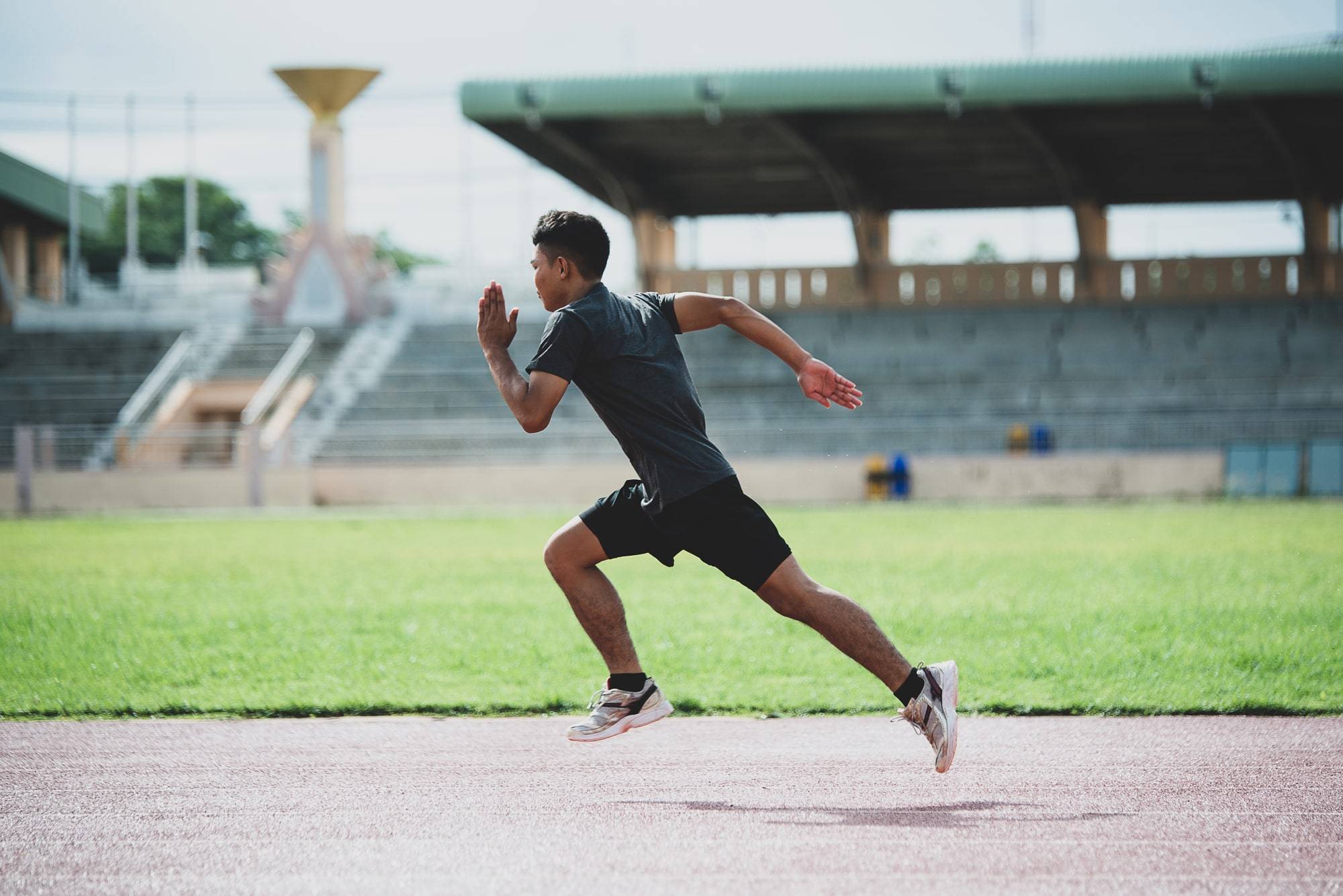
¿Qué más podría estar impidiéndote correr a tu máxima velocidad? Aquí te presentamos las razones más comunes y algunos consejos para ayudarte a mejorar tu ritmo.
1. El bloqueo de velocidad: Tus entrenamientos carecen de variedad.
Según un fisiólogo del ejercicio y entrenador de corredores Susan Paul, Si sigues entrenando de la misma manera y con la misma intensidad, tu cuerpo acabará adaptándose y tu progreso se estancará.

Una vez que alcances los límites de tu capacidad aeróbica, Tu rendimiento tiende a estancarse. Para seguir mejorando, tu entrenamiento debe ser más específico. En otras palabras, Para correr más rápido, a veces necesitas correr más rápido., lo que significa añadir trabajo de velocidad.
El camino hacia un ritmo más rápido: Añade entrenamientos de velocidad a tu rutina de entrenamiento.
Paul recomienda comenzar con un día de entrenamiento de velocidad por semana. También enfatiza la importancia de una adecuada calentamiento antes de alcanzar ritmos más rápidos. Por ejemplo, alguien que busca mejorar su tiempo en la media maratón debería primero correr 1-2 millas fácil, luego pasar a sus intervalos de velocidad.
Ejemplos de entrenamientos de velocidad efectivos:
Intervalos: 4 series de 800 m al ritmo de una carrera de 10 km con 2 minutos de trote suave entre cada una.
Carreras de ritmo: 20-30 minutos a un ritmo cómodamente exigente (puedes hablar, pero solo en frases cortas).
Sesiones de fartlek: ráfagas de velocidad no estructuradas (e.g. , 1 minuto rápido, 2 minutos suave, repetido).

A monitor de frecuencia cardíaca, Al igual que COOSPO, es muy útil para controlar tu esfuerzo durante los intervalos o las carreras de ritmo, para que sepas que estás entrenando lo suficientemente duro sin excederte.
El bloqueo de velocidad: No prepararse mentalmente para ritmos más rápidos
Una cosa es decir Quieres ir más rápido; es otra cosa sentirse cómodo corriendo más rápido. Muchos corredores tienen dificultades porque simplemente no... preparan su sistema nervioso y su mentalidad para la velocidad.
La velocidad no es solo física, sino también psicológica. Ir más rápido desencadena sensaciones que quizás evites inconscientemente: respiración agitada, palpitaciones, ardor en las piernas. Si tu cerebro te aleja habitualmente de la incomodidad, tu ritmo se estancará.
La psicóloga deportiva Dra. Christine Smith, que trabaja con atletas de resistencia, afirma: “Tu cerebro se forma expectativas sobre qué ritmo se siente ‘normal’. Si nunca entrenas a velocidades más rápidas, tu sistema nervioso se resistirá, incluso si tus músculos son capaces de hacerlo”.”
Esto explica por qué algunos corredores pueden esforzarse mucho en ráfagas cortas (como al final de una carrera), pero nunca logran desarrollar una velocidad sostenible a través del entrenamiento, porque sus cuerpos simplemente no se han adaptado. sintió Un ritmo lo suficientemente rápido como para permitir la adaptación psicológica.
El camino hacia un ritmo más rápido: concéntrese en las zancadas en lugar de los sprints.
No tienes que lanzarte directamente a dolorosos sprints a toda velocidad para entrenar tu mente para la velocidad. Una forma poderosa pero suave de introducir la carrera más rápida es con pasos.
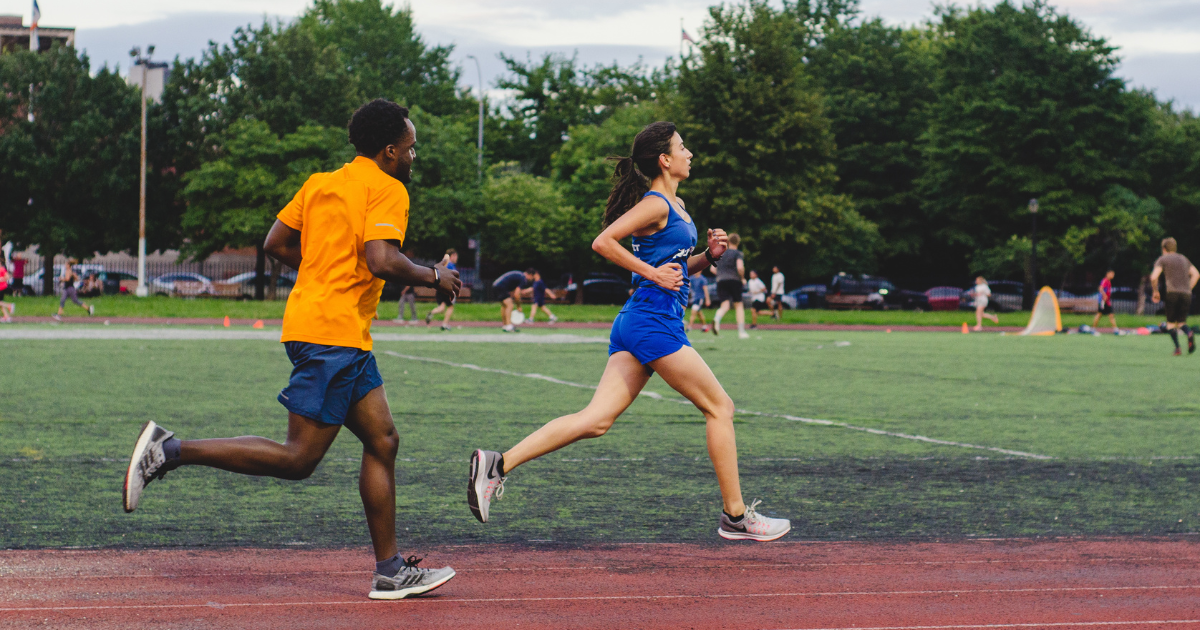
Zancadas Son breves (de 15 a 30 segundos) ráfagas de aceleración suave y controlada, que a menudo se realizan al final de carreras suaves. Ayudan a tu cuerpo. sentir Ritmos más rápidos sin el alto riesgo de lesiones que conllevan los entrenamientos de velocidad masivos.
Así es como se hacen los pasos:
- Tras una carrera suave, busca un tramo llano.
- Correr de 15 a 30 segundos, acelerando suavemente hasta aproximadamente un 85-90% de esfuerzo.
- Concéntrese en una respiración relajada y una zancada fluida.
- Regresa caminando o trotando para recuperarte.
- Repita de 6 a 10 veces.
Los ejercicios de zancada entrenan al cerebro para reconocer velocidades más altas como alcanzables. También ayudan a mejorar coordinación neuromuscular, Enseñar a tus músculos a activarse en la secuencia necesaria para correr más rápido.
3. El bloque de velocidad: entrenar solo en carreteras planas o en carreteras sin tráfico
Muchos corredores pasan toda su vida entrenando sobre asfalto: superficies rectas, planas y predecibles. Si bien es seguro y cómodo, esto puede ser otro factor limitante oculto para las mejoras de velocidad.
En carreteras llanas, el cuerpo entra en ritmo, pero rara vez se enfrenta a los desafíos mecánicos que liberan el potencial de velocidad.
El entrenador de atletismo y especialista en rendimiento Mario Rossi afirma: “Los músculos se adaptan a la exigencia a la que los sometes. Sin variación, estás enseñando a tu cuerpo a rendir bien en la misma carrera, no a correr más rápido”.
El camino hacia un ritmo más rápido: Añade algunas cuestas y entrenamiento cruzado.
Entrenamiento en colinas Es uno de los métodos más eficaces para ganar velocidad, no porque las cuestas sean "difíciles", sino porque activan los músculos de forma diferente y enseñan al cuerpo a generar potencia.
Intenta añadir:
- Repeticiones en la colina: Esfuerzos cortos en subida (8–12 series de 30 segundos cuesta arriba al 90% de esfuerzo, con un trote suave de regreso) un día a la semana.
- Recorridos por terreno ondulado: Rutas con suaves ascensos y descensos que pondrán a prueba tanto la fuerza como la coordinación.
- Entrenamiento de fuerza: Ejercicios como las sentadillas, las zancadas y las elevaciones de cadera desarrollan grupos musculares que te hacen más rápido y resistente.
Las cuestas obligan a tus glúteos e isquiotibiales a trabajar más, desarrollando producción de fuerza Eso se traduce directamente en velocidad en terreno llano.

El entrenamiento cruzado —como el ciclismo, el remo o la natación— también contribuye a mejorar la capacidad cardiovascular sin el impacto repetitivo de correr. Esto significa que puedes aumentar la carga de entrenamiento total y la recuperación sin riesgo de lesiones, lo que te permite estar mejor preparado para correr rápido cuando más importa.
Un metaanálisis en Medicina deportiva Esto lo respalda: los corredores que combinaron el entrenamiento de fuerza y el entrenamiento cruzado con la carrera mostraron mejoras significativas en la función neuromuscular y la economía de carrera, ambos factores clave para determinar la velocidad.


Deja un comentario
Este sitio está protegido por hCaptcha y se aplican la Política de privacidad de hCaptcha y los Términos del servicio.