













![[2 Pack] Coospo Breathable Neck Gaiter Face Scarf Mask COOSPO](http://www.coospo.com/cdn/shop/files/106de7b046babc03aa610173af6e31aa_599da3fe-9907-4b1e-8eb0-f08b3032720b.png?v=1720591174&width=1600)


![[4 Pack] Coospo Soft Breathable Chilly Towel, Microfiber Towel COOSPO](http://www.coospo.com/cdn/shop/files/1_904094cc-62ee-40e9-aa21-415effb385b4.png?v=1720527561&width=1600)

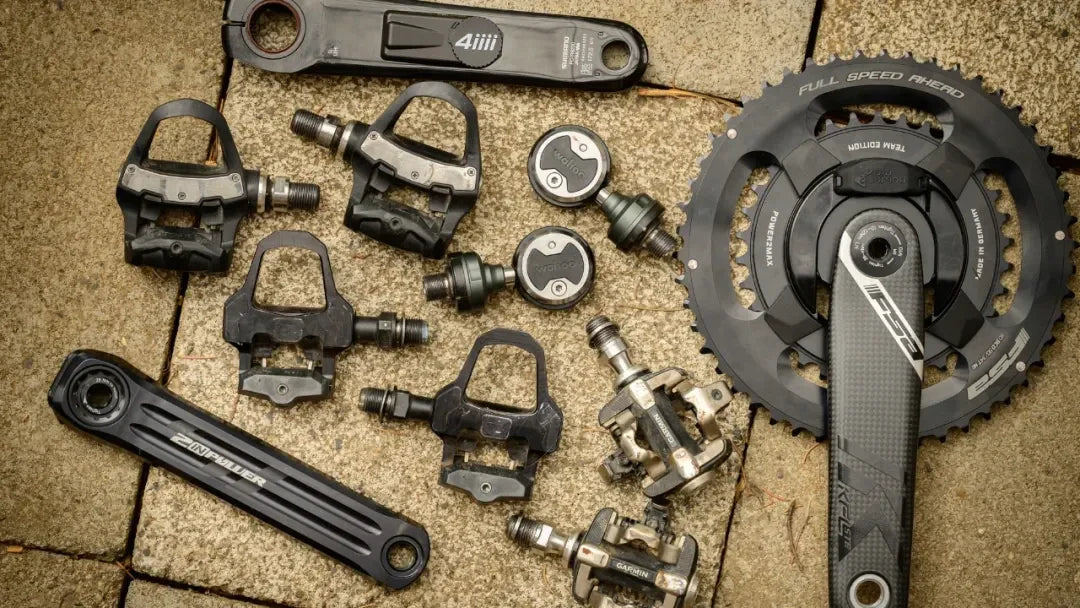
Choosing a power meter used to feel like picking a lock with too many keys. Every type measures the same truth, your real power output in watts, yet each does it from a different mechanical “heartbeat” of the bike.
The question “Which type should I buy?” is really a quieter question underneath: What kind of rider am I, and what kind of data story do I want while riding?
Let’s walk through the main types of power meters, not as a catalog of specs, but as personalities in the drivetrain ecosystem.
Pedal-Based Power Meters
The main advantage of pedal-based power meters is their flexibility. A single set of pedals can be quickly transferred between different bikes, often in just a few minutes. For riders who use multiple bikes, this alone can be a deciding factor. In addition, you can change pedal bodies to match different shoe types, allowing the same power meter spindle to work with both road and mountain bike shoes, which further expands its versatility.

Because of their placement, they measure force at one of the most direct points in the human–machine system: the feet. This makes them especially intuitive for riders who think in terms of left–right balance, pedal smoothness, and refining technique. Many modern pedal systems even separate left and right leg data, offering a split view of pedaling symmetry.
A true dual-sided power meter is most useful when you specifically need to understand what each leg is contributing, rather than just your overall wattage. This is typically relevant in cases of known imbalance, injury rehabilitation, or when you want the highest possible data accuracy. With a single-sided system, any imbalance can distort the results because it assumes both legs are producing equal power and simply doubles the measured output. A dual-sided setup measures each leg independently, giving a more precise view of total power and how it is distributed. That said, for most cyclists, consistency in data is often more important than absolute precision, and a simpler single-sided system is usually sufficient.
Best for: Riders with multiple bikes and anyone who values flexibility.
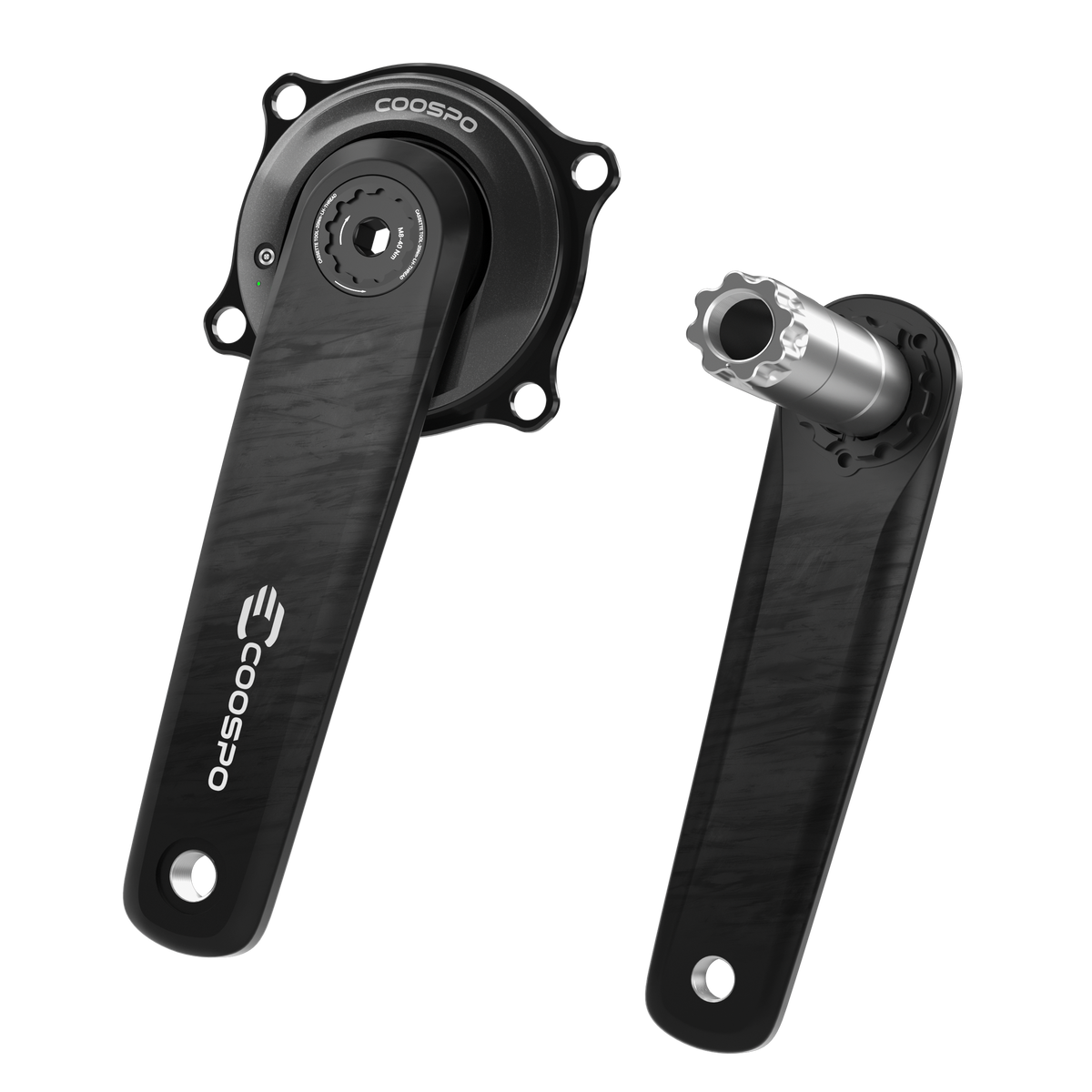
Crank Arm Power Meters
Crank arm systems place the sensor directly on the crank arm, which makes them appealing for their simplicity. They are typically easy to install and are often lighter and more affordable than more complex alternatives. In addition, because they sit within the bike’s frame triangle, they are somewhat protected from impacts and weather exposure, unlike pedal-based systems that are more exposed.

Like pedal-based systems, crank-based meters are available in either single- or dual-sided configurations, offering similar cost savings with single-sided setups as well as upgrade paths to true dual-sided measurement.
The key benefit of crank-based power meters is their lower cost. They are often the most budget-friendly entry point into power-based training, particularly single-sided models. Installation is also straightforward, provided the unit is compatible with your current crankset.
The limitation is that it is specific to that crank. If you switch bikes or groupsets, it may not carry over.
Best for: Riders getting started with power, anyone on a budget, and those who want a simple, reliable setup.
Spindle-Based Power Meters
Spindle-based systems integrate the sensor directly into the crank spindle, making them nearly invisible from the outside. The electronics are fully sealed within the axle, which helps protect them from shocks and harsh weather conditions. In addition, the design allows space for an AAA battery, extending battery life compared to systems that rely on coin-cell batteries.

They are generally more durable against environmental damage than pedal-based systems and provide a more comprehensive representation of the drivetrain compared to crank-arm-only designs. In practice, they reflect a more holistic view of the rider’s total power output.
Most of these systems are still single-sided, measuring only the non-drive side and then doubling the value. As a result, they function in practice like a single-sided crank arm meter. Similar to crank arm meters, they are often designed for specific crank and bottom bracket standards, which restricts their compatibility.
Best for: Riders looking to add power to their existing SRAM bike using Force, Rival, or Apex cranks.
Spider-Based Power Meters
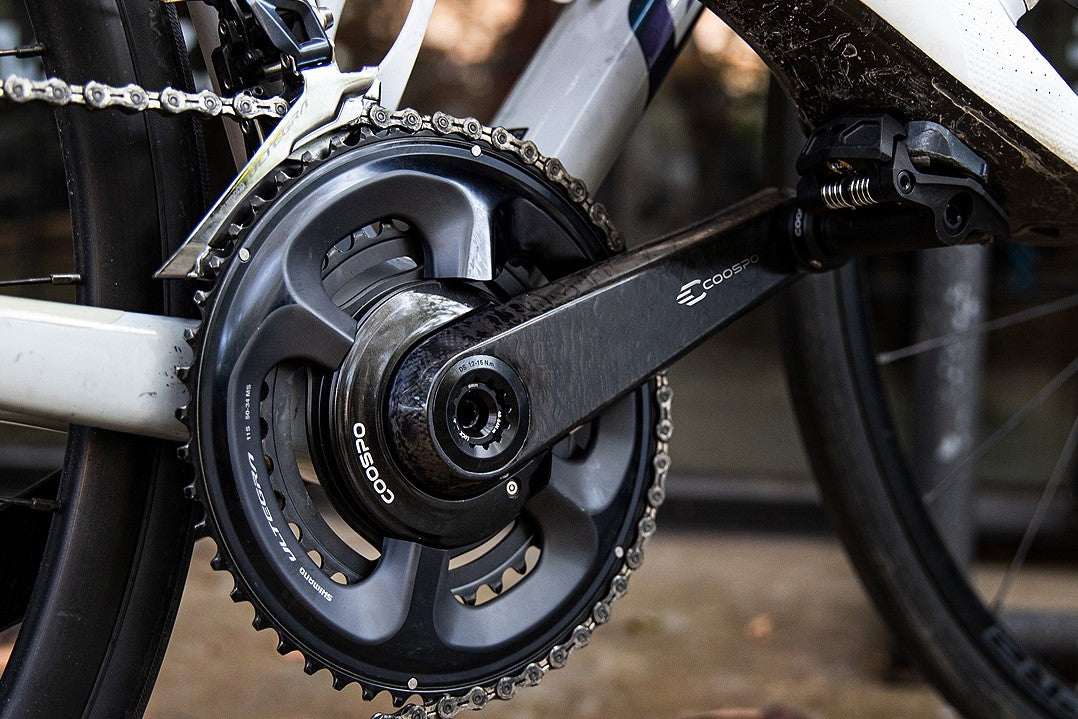
Spider-based systems measure power at the point where the crank arms connect to the chainrings. This placement offers a key advantage: it records power from both legs as a single combined value and is less influenced by differences in pedaling technique. Since the measurement happens after the forces from both legs are merged, spider-based systems generally deliver highly consistent data across a wide range of riding conditions.
A good example of this type of design is the Coospo S10, which follows the same spider-based measurement principle to provide stable and reliable power data for structured training.

Coaching platforms and performance labs often cite spider-based systems in validation studies due to their consistently lower variability compared to single-sided designs. In cycling ergometry research, the literature frequently highlights the need to reduce measurement noise when monitoring adaptations over time, and spider-based meters are particularly effective at achieving that.
The drawback is that they depend on a specific crankset and chainring interface. While it is possible to transfer them between bikes, it isn’t straightforward. They also tend to be the most expensive option, comparable in cost to pedal-based power meters.

Spider-based meters are designed for riders focused on long-term development, such as structured training phases, seasonal planning, and performance gains tracked over months rather than individual rides. They prioritize consistency and precision over adaptability.
Hub-Based Power Meters
At the very end of the drivetrain is the hub, rotating silently within the rear wheel. Hub-based power meters capture force only after it has traveled through the full system—pedals, crank, chain, cassette, and ultimately into the wheel.
This position provides them with a distinctive perspective. They are frequently recognized for their consistency, as they remove many variables from the drivetrain. Once fitted into a wheel, they effectively become part of the rolling system itself.

For time trialists and triathletes, hub-based systems were once popular because they could be combined with aerodynamic rear wheels, enabling a single integrated setup for both training data and race configuration. However, they have largely fallen out of favor over the past decade.
Hub-based systems measure power after drivetrain losses are included, so the displayed value represents “road power” rather than “engine/body power.” This is generally acceptable for many training applications, but it can make direct comparisons with other measurement systems a bit more difficult.
Choosing What Works for You
Once you understand the options, the decision comes down to how you ride.
If you switch between bikes or travel often, and don’t want to purchase separate power meters for each bike, a pedal-based system can be the most practical. If you are starting out or want to keep costs down, a crank arm or spindle-based single-sided system does the job. The data is consistent, and that is what you need for training.
If durability is a priority and you do not plan to move the meter from bike to bike, a spider-based power meter is a solid choice for riders who just want to set and forget.


Leave a comment
This site is protected by hCaptcha and the hCaptcha Privacy Policy and Terms of Service apply.