





















![[2 Pack] Coospo Breathable Neck Gaiter Face Scarf Mask COOSPO](http://www.coospo.com/cdn/shop/files/106de7b046babc03aa610173af6e31aa_599da3fe-9907-4b1e-8eb0-f08b3032720b.png?v=1720591174&width=1600)


![[4 Pack] Coospo Soft Breathable Chilly Towel, Microfiber Towel COOSPO](http://www.coospo.com/cdn/shop/files/1_904094cc-62ee-40e9-aa21-415effb385b4.png?v=1720527561&width=1600)

Die meisten Radfahrer vertrauen ihren Ohren mehr, als ihnen bewusst ist.
Viele Motorradfahrer achten beim Fahren auf der Straße instinktiv auf sich nähernde Fahrzeuge. Selbst ohne zurückzublicken, warnt das Motorengeräusch oft frühzeitig vor einem Auto, das sich von hinten nähert.
Es fühlt sich natürlich an. Ein Fahrzeug hören. Überprüfen Sie Ihre Umgebung. Bereiten Sie sich auf ein Überholmanöver vor. Was passiert aber, wenn man es nicht hören kann?
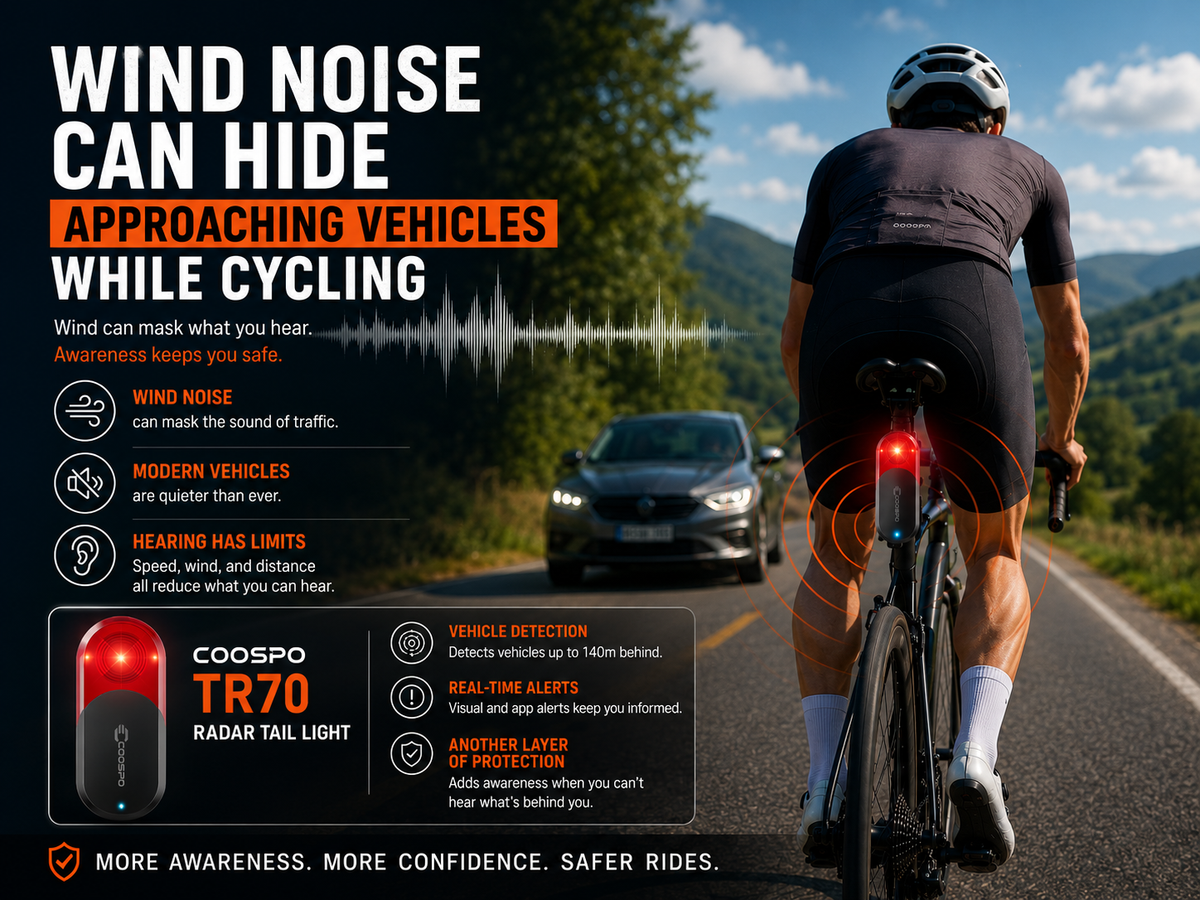
Viele Radfahrer gehen fälschlicherweise davon aus, dass sie ein sich näherndes Fahrzeug immer bemerken. Tatsächlich kann der Windlärm die Hörwahrnehmung von Radfahrern jedoch erheblich beeinträchtigen, insbesondere bei höheren Geschwindigkeiten.
In manchen Situationen kann ein Fahrzeug viel näher sein als erwartet, bevor ein Radfahrer es überhaupt bemerkt.
Schauen wir uns genauer an, warum das passiert und was das für das Bewusstsein der Fahrer bedeutet.
Deine Ohren sind während der Fahrt ständig im Einsatz.
Wenn es um die Sensibilisierung für das Radfahren geht, konzentrieren sich die Menschen oft auf das Sehen.
Sie denken über Folgendes nach:
Blick nach vorn. Blick in die Spiegel. Beobachtung von Kreuzungen. Einschätzung der Straßenverhältnisse. Doch auch das Gehör spielt eine wichtige Rolle. Selbst unbewusst verarbeiten Radfahrer ständig Geräusche aus ihrer Umgebung. Diese Geräusche helfen, wichtige Fragen zu beantworten:
Nähert sich ein Fahrzeug?
Ist ein anderer Radfahrer in der Nähe?
Droht mir Gefahr von hinten?
Mit der Zeit entwickeln Motorradfahrer eine erstaunliche Fähigkeit, Geräusche zu nutzen, um zu verstehen, was um sie herum geschieht.
Das Problem ist, dass das Gehör nicht immer zuverlässig ist.
Was genau ist Windgeräusch?
Windgeräusche entstehen, wenn Luft schnell um die Ohren und den Helm des Fahrers strömt.
Je schneller man fährt, desto deutlicher wird es. Man muss nicht sprinten, damit das passiert. Windgeräusche können sich deutlich verstärken bei:
Schnelle Abfahrten
Starker Gegenwind
Offene Straßen
Hochgeschwindigkeitsfahrt
Böige Wetterbedingungen
Bei niedrigeren Geschwindigkeiten bleiben die Umgebungsgeräusche relativ klar. Mit zunehmender Geschwindigkeit verstärkt sich das Windgeräusch und überlagert diese Geräusche. Schließlich kann es zum lautesten Geräusch werden, das ein Fahrer wahrnimmt.
Warum Windgeräusche wichtig sind
Das größte Problem ist die Maskierung. Maskierung tritt auf, wenn ein Geräusch so dominant wird, dass andere Geräusche schwerer hörbar werden.
Stellen Sie sich vor, Sie versuchen, sich neben einem lauten Ventilator zu unterhalten. Das Gespräch findet zwar statt, aber der Ventilator erschwert es, alles deutlich zu verstehen.
Der Wind bewirkt beim Radfahren etwas Ähnliches.Mit zunehmendem Windlärm wird es schwieriger zu hören:
Fahrzeugmotoren
Reifengeräusche
Elektrofahrzeuge
Andere Radfahrer
Verkehr, der sich von hinten nähert
Das bedeutet, dass die Fahrer möglicherweise weniger Vorwarnung erhalten, als sie erwarten.
Geschwindigkeit verändert alles
Viele Radfahrer unterschätzen, wie schnell dieser Effekt auftritt. Stellen Sie sich einen Radfahrer vor, der mit 15 km/h auf einem ruhigen Radweg fährt. Der Windlärm ist relativ gering. Umgebungsgeräusche sind gut wahrnehmbar. Stellen Sie sich nun vor, Sie fahren mit 40 km/h einen Hügel hinunter.h.Suddenly: Der Wind ist lauter. Verkehrsgeräusche sind undeutlicher.
Die Einschätzung des Fahrzeugabstands wird schwieriger. Je schneller der Fahrer fährt, desto schwieriger wird es, sich allein auf das Gehör zu verlassen.
Dies ist einer der Gründe, warum manche Radfahrer überrascht sind, wenn ein Fahrzeug näher kommt als erwartet.
Das Fahrzeug war nicht unbedingt geräuschlos. Der Fahrer konnte es einfach nicht deutlich hören.
Moderne Fahrzeuge werden leiser
Ein weiterer Faktor ist die sich wandelnde Fahrzeugtechnologie. Viele moderne Fahrzeuge sind deutlich leiser als ältere Autos. Dies gilt insbesondere für:
Elektrofahrzeuge (EVs)
Hybridfahrzeuge
Neuere Pkw
Bei niedrigeren Geschwindigkeiten erzeugen manche Elektrofahrzeuge kaum Motorengeräusche. Dadurch erhalten Radfahrer möglicherweise weniger akustische Hinweise darauf, dass sich ein Fahrzeug nähert. In Kombination mit Windgeräuschen kann dies die Wahrnehmung des Verkehrs allein durch das Gehör noch weiter erschweren.
Früher kündigte ein lauter Motor oft schon von Weitem die Anwesenheit eines Fahrzeugs an. Heute ist das nicht mehr immer der Fall.
Warum Landstraßen tückisch sein können
Viele Radfahrer verbinden starken Verkehr mit Gefahr. Doch auch ruhigere Straßen können ihre eigenen Herausforderungen mit sich bringen.
Auf Landstraßen verbringen Radfahrer oft lange Zeiträume, ohne Fahrzeuge zu sehen oder zu hören. Dies kann ein Gefühl von Geborgenheit erzeugen. Dann taucht plötzlich von hinten ein Fahrzeug auf. Da der Verkehr weniger häufig ist, achten die Fahrer möglicherweise nicht aktiv darauf.
Berücksichtigt man noch den Windlärm, kann sich die Annäherung überraschend abrupt anfühlen. Dies ist einer der Gründe, warum viele Radfahrer berichten, dass sie sich auf ansonsten ruhigen Straßen von Fahrzeugen erschreckt fühlen. Die Straße wirkt ruhig, bis sie es nicht mehr ist.

Warum immer mehr Radfahrer nach zusätzlichen Hilfsmitteln zur Sensibilisierung suchen
Da das Hörvermögen Einschränkungen hat, suchen viele Motorradfahrer nach zusätzlichen Möglichkeiten, den Verkehr zu beobachten. Manche benutzen Spiegel. Andere führen häufige Schulterblicke durch.
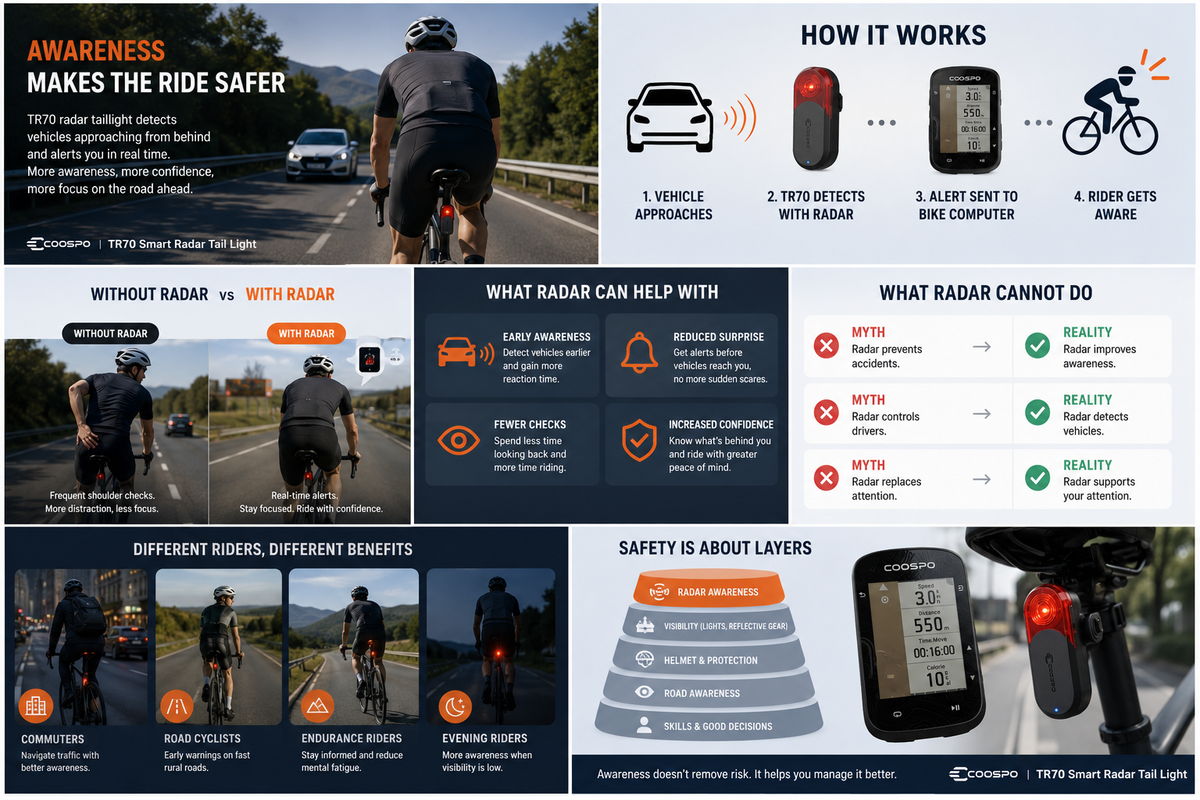
Manche Fahrer kombinieren mehrere Methoden, um sich über das Geschehen hinter ihnen auf dem Laufenden zu halten. Die Radartechnologie ist eine weitere Option geworden.. Anstatt sich nur auf Geräusche zu verlassen, überwachen Radarsysteme herannahende Fahrzeuge und geben Warnungen aus, wenn Verkehr hinter dem Fahrer erkannt wird.
Dies ersetzt nicht das Bewusstsein. Es stellt eine weitere Informationsquelle dar. Für viele Radfahrer besteht der Vorteil nicht darin, dass die Straßen über Nacht sicherer werden. Der Vorteil besteht darin, dass man mehr Vertrauen in das hat, was hinter einem passiert, selbst wenn der Verkehr nicht deutlich zu hören ist.

Bewusstsein umfasst mehr als einen Sinn.
Die besten Fahrer verlassen sich nicht auf eine einzige Informationsquelle.
Sie kombinieren mehrere Eingangsgrößen:
Vision
Anhörung
Straßenpositionierung
Verkehrsverhalten
Erfahrung
Jede Quelle hat Stärken und Schwächen. Die Sicht kann eingeschränkt sein. Das Hörvermögen kann durch Wind beeinträchtigt werden. Die Verkehrslage kann sich schnell ändern. Je mehr Informationen einem Fahrer zur Verfügung stehen, desto besser ist er auf Entscheidungen vorbereitet.
Schlussbetrachtung
Viele Radfahrer vertrauen ihren Ohren, ohne jemals darüber nachzudenken. Meistens funktioniert das gut. Doch Windgeräusche können die Fähigkeit eines Fahrers, herannahenden Verkehr zu hören, unbemerkt beeinträchtigen, insbesondere bei schnellen Fahrten, Abfahrten oder windigen Bedingungen.
Moderne Fahrzeuge werden zudem immer leiser, wodurch die auf Geräuschen basierende Wahrnehmung noch unzuverlässiger wird als früher. Das heißt nicht, dass das Gehör unwichtig ist. Es bedeutet einfach, dass das Gehör Grenzen hat. Wenn Sie das nächste Mal gegen starken Gegenwind ankämpfen oder eine Abfahrt hinunterrasen, stellen Sie sich eine einfache Frage:
Kannst du wirklich alles hören, was hinter dir passiert? Die Antwort ist möglicherweise weniger sicher, als Sie denken. Und deshalb erfordert Bewusstsein oft mehr als nur Zuhören.



Hinterlassen Sie einen Kommentar
Diese Website ist durch hCaptcha geschützt und es gelten die allgemeinen Geschäftsbedingungen und Datenschutzbestimmungen von hCaptcha.