















![[2 Pack] Coospo Breathable Neck Gaiter Face Scarf Mask COOSPO](http://www.coospo.com/cdn/shop/files/106de7b046babc03aa610173af6e31aa_599da3fe-9907-4b1e-8eb0-f08b3032720b.png?v=1720591174&width=1600)


![[4 Pack] Coospo Soft Breathable Chilly Towel, Microfiber Towel COOSPO](http://www.coospo.com/cdn/shop/files/1_904094cc-62ee-40e9-aa21-415effb385b4.png?v=1720527561&width=1600)

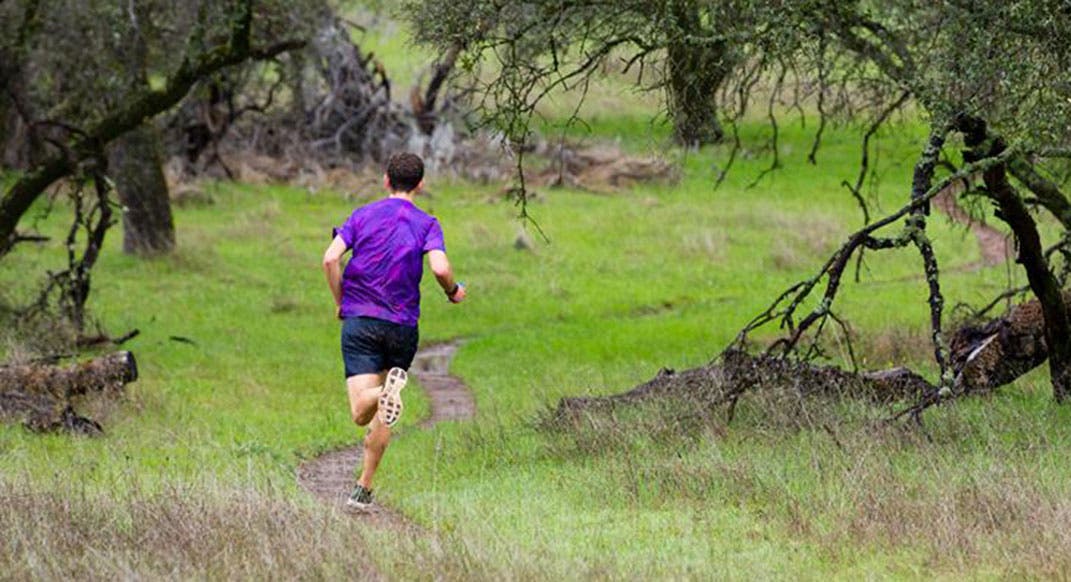
You may not always have a coach nearby to check your running form, but understanding your stride and running mechanics can help you run more efficiently and maintain better performance.
Good running form can help reduce unnecessary effort and make running feel easier, especially as fatigue sets in. While everyone has their own natural running style, paying attention to your posture, movement, and stride can help you run more comfortably and efficiently.
Proper Running Form: Head and Shoulders
Your Head
Running form starts from the top down, so your head position matters too. Instead of looking at your feet, keep your gaze directed forward. Avoid tilting your chin up or down, especially when fatigue sets in.
A focused gaze can help you maintain a tall, balanced posture and keep your neck aligned with your spine. Try to keep your ears in line with your shoulders rather than letting your head move ahead of your body. This alignment can reduce unnecessary stress on the neck and shoulders.
Your Shoulders
Many people spend hours hunched over desks or phones, so maintaining an open posture while running is important. Keep your shoulders relaxed and gently pulled back rather than rounding them forward. A hunched position can affect speed, endurance, and deep breathing.
Your shoulders should move naturally with your legs in an opposite pattern. As your right leg moves forward, your left shoulder moves forward as well, creating a natural cross-body rhythm.
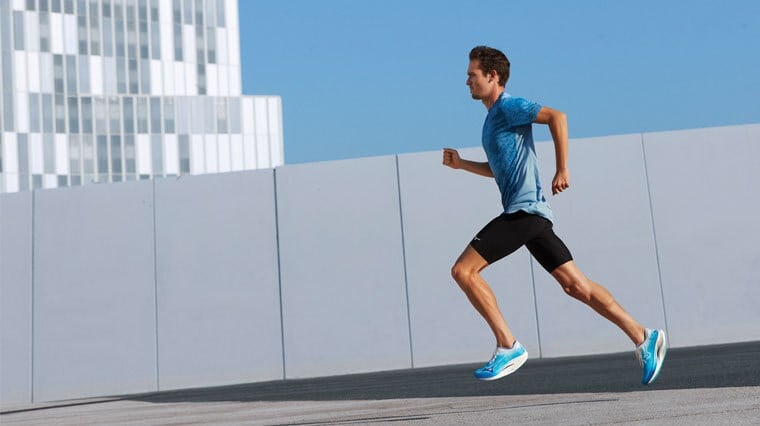
It’s also common for runners to tense or shrug their shoulders as they become tired. This uses extra energy and can make running less efficient. If you notice tension, shake out your arms, drop your shoulders, and consciously relax your upper body.
When taking a deep breath, think about expanding your upper body outward rather than lifting your shoulders upward. Practising controlled breathing regularly can make it easier to maintain relaxed shoulders while running.
Your Arms
Your arm movement plays an important role in your running form and can affect your speed and efficiency. Keep your elbows bent at around 90 degrees, with your hands moving naturally between your chin and hip. This helps support forward momentum as you run.
Keep your elbows close to your sides and avoid letting your arms swing across your body. Crossing the center line can disrupt your momentum and make your movement less efficient. Pointing your thumbs upward or imagining a line running down the center of your body can help keep your arm swing in the right direction.
Your Hands
Your hands may seem like a small part of running form, but keeping them relaxed can help you avoid wasting energy. Avoid tightly clenched fists or overly loose, exaggerated movements.
A simple trick is to imagine holding a small potato chip gently between your thumb and finger. Your grip should be relaxed enough that you could hold it without crushing it.
The goal is to find a comfortable middle ground: relaxed hands, but not completely loose, so your upper body can move naturally without unnecessary tension.
Your Torso
Your core and torso are central to running form, helping provide stability, power, and balance. Focus on maintaining a tall, elongated posture rather than collapsing forward, which allows you to use the elastic energy generated with each stride.
Keep your core engaged but not rigid. It should help prevent your body from leaning too far forward or backward while still allowing natural movement.
Your torso should also respond to each step. As one leg moves forward, your body naturally shifts slightly toward that side, helping transfer energy through the torso and into the stride. Avoid keeping your torso completely stiff or fixed in the center, as this can limit efficient movement and power generation.
Monitor Your Heart Rate

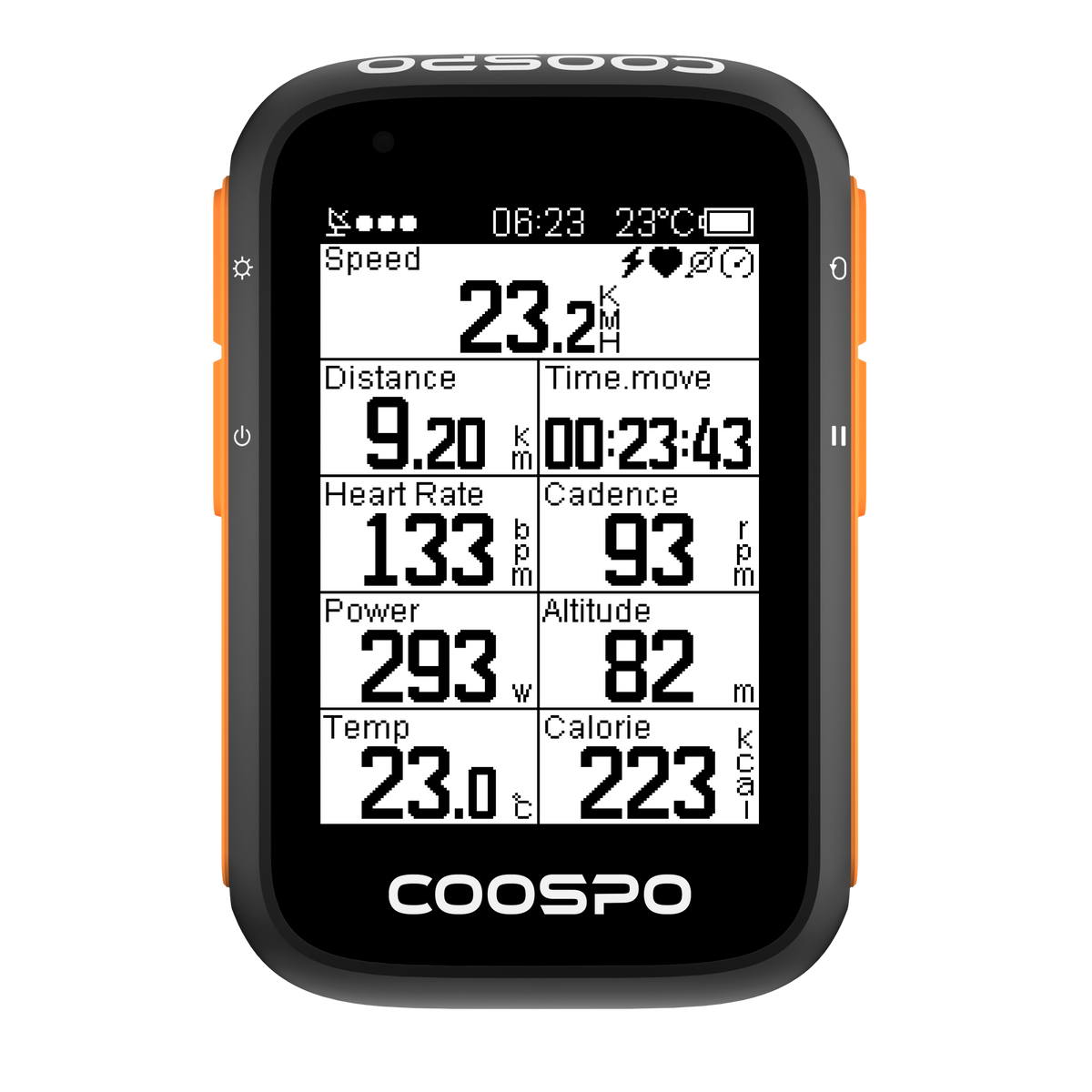
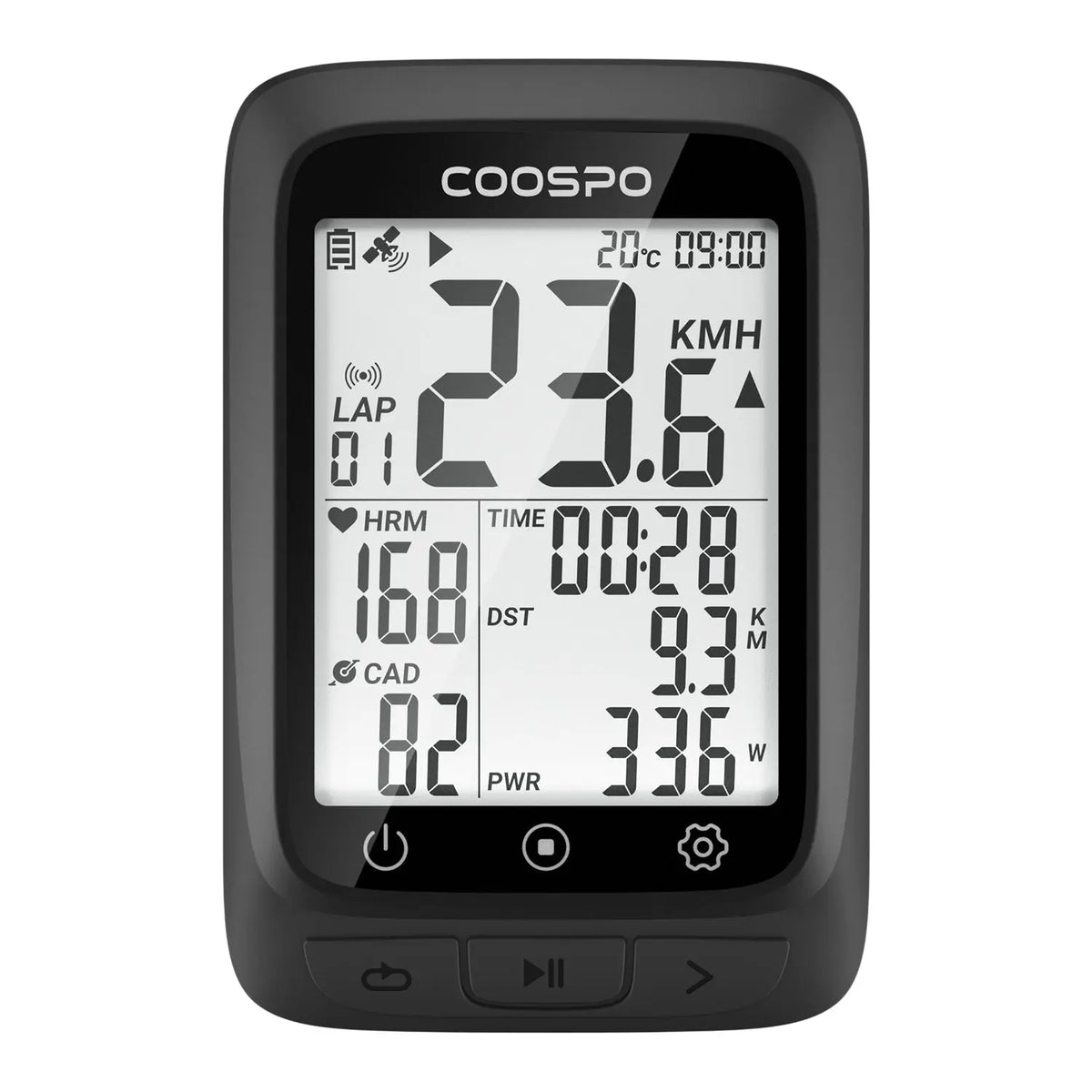
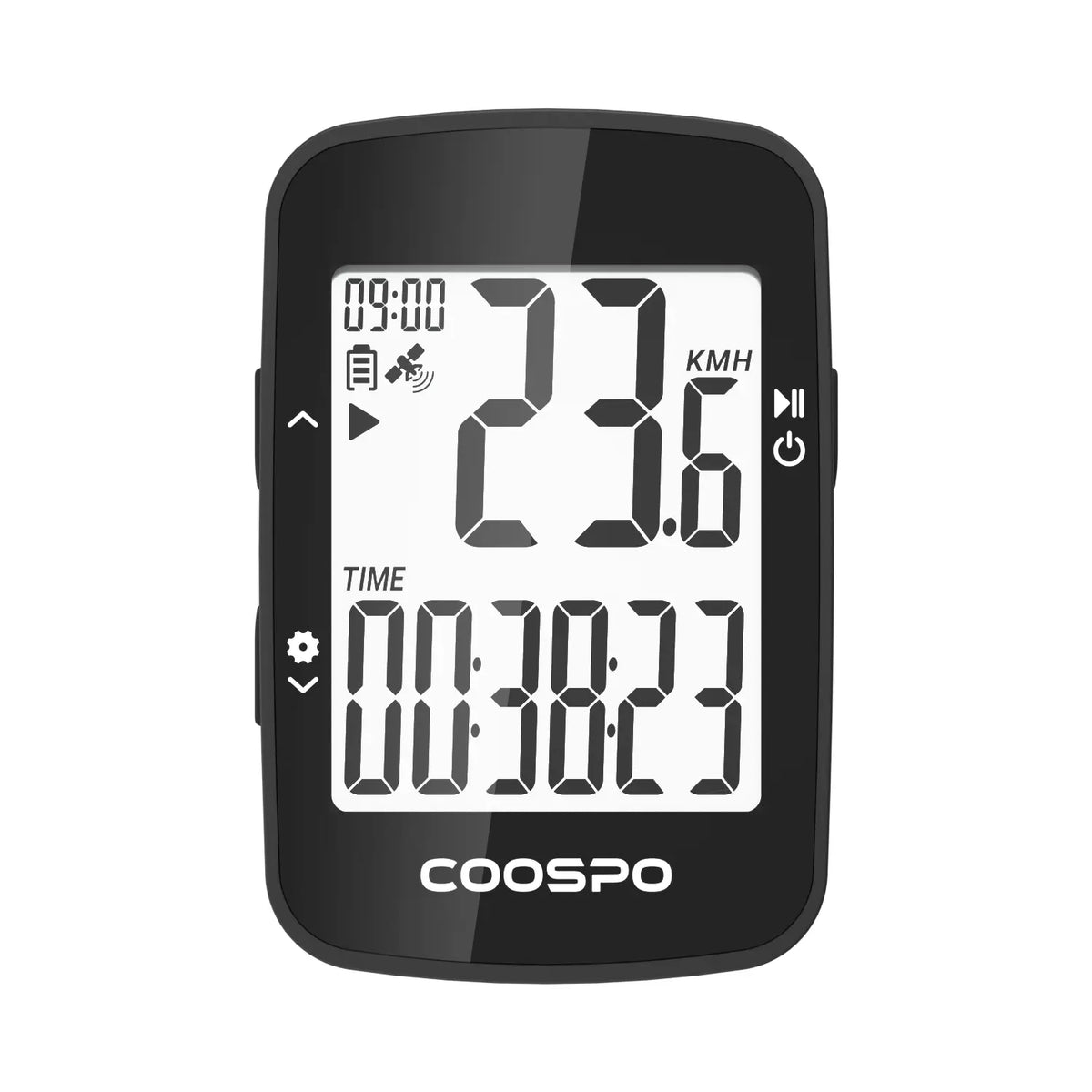
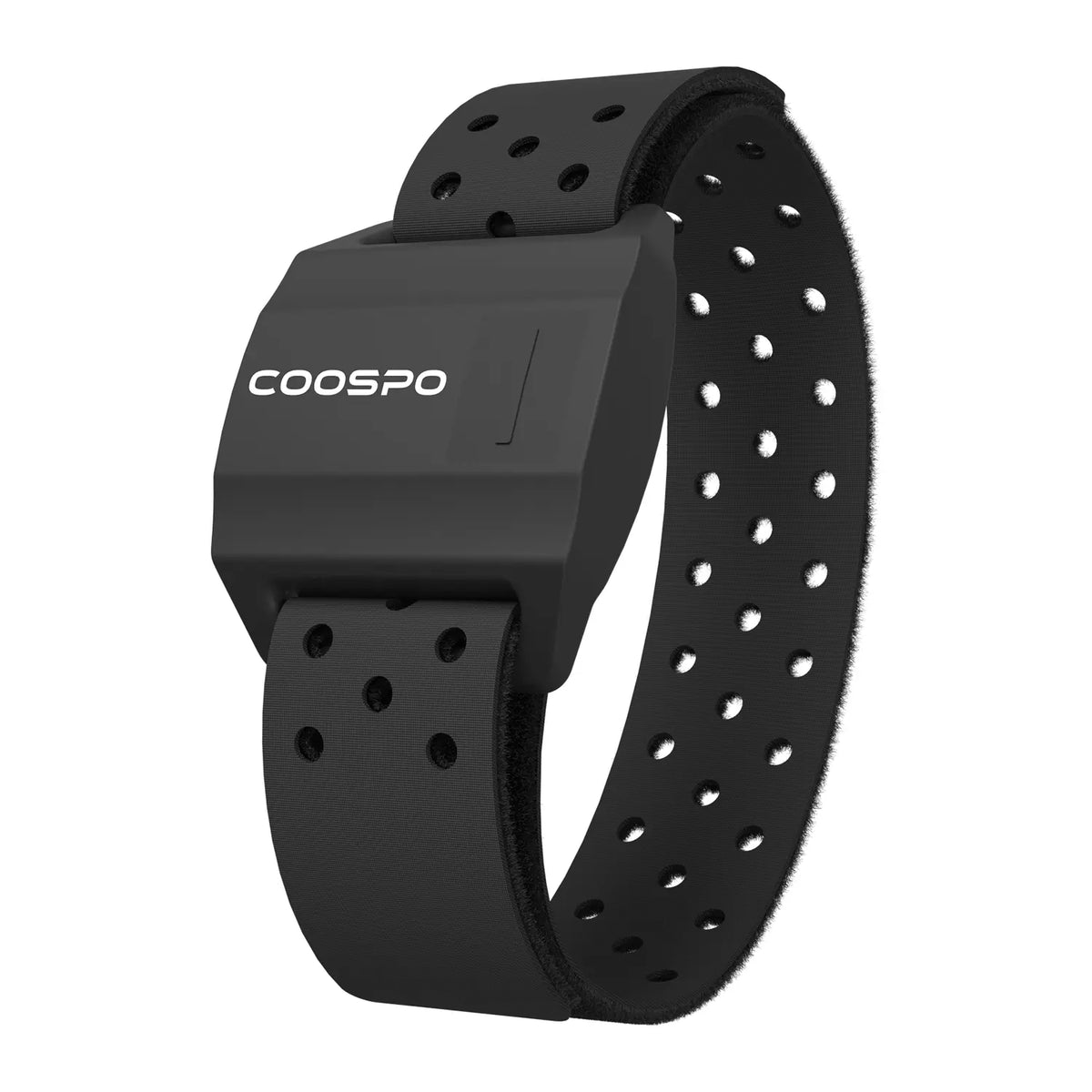
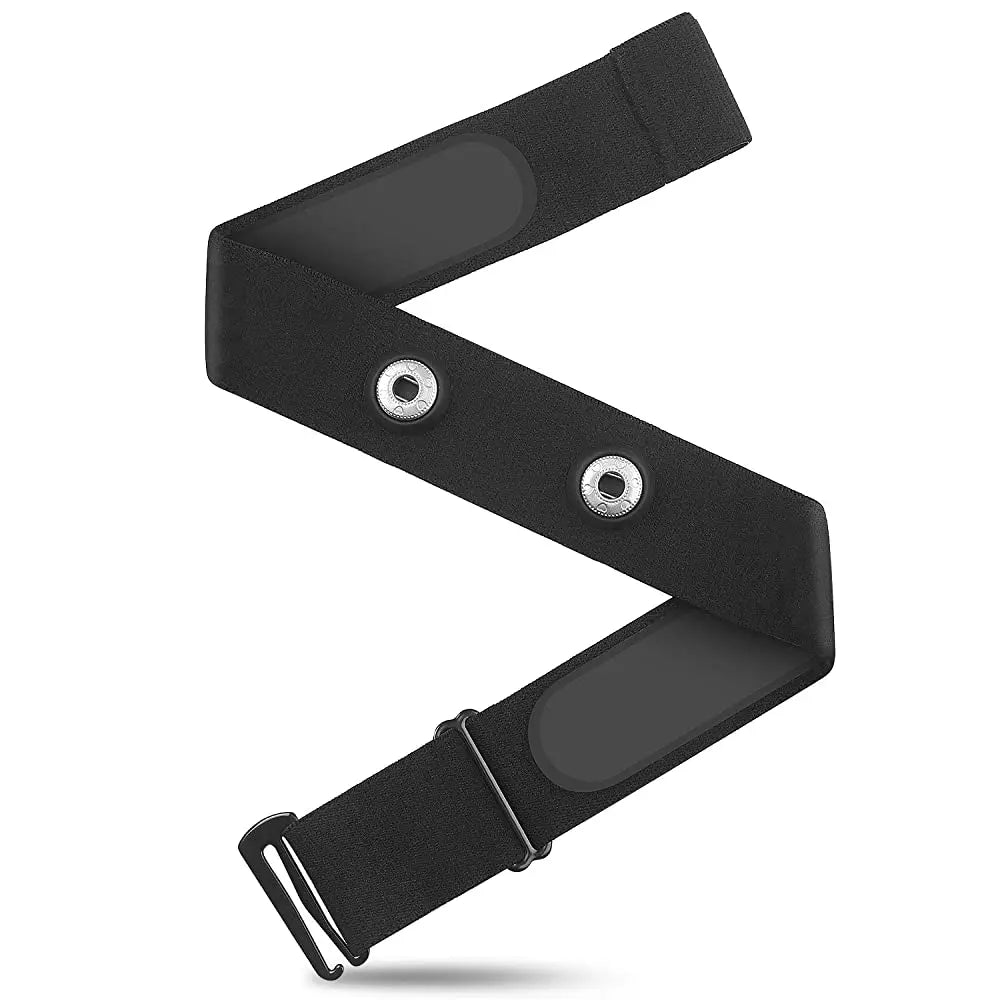
Good running form is easier to maintain when you’re training at the right intensity. A COOSPO heart rate monitor can help you track your heart rate in real time, making it easier to understand your effort level and manage your pace during training. By keeping an eye on your heart rate, you can better control intensity and avoid pushing too hard, especially during longer runs or when fatigue starts to affect your running form.
Your Hips
When running, a slight forward lean can help you move efficiently, especially when accelerating. The key is to create the lean from your hips and ankles, rather than rounding your shoulders or folding your upper body forward.
Your torso should sit slightly ahead of your hips, allowing your glutes to contribute more effectively to each stride. This can help you generate power without putting unnecessary stress on your lower back.
The goal is not to bend sharply at the waist. Instead, think of your body as forming a slight diagonal line from your shoulders to your ankles, with the lean coming naturally from the ankles.
Your Knees
Your knees should stay aligned with the middle of your feet when your foot strikes the ground. On flat roads, there’s no need to drive your knees too high, as excessive knee lift can waste energy.
When fatigue sets in, some runners develop a “shuffle,” barely lifting their feet from the ground. In this case, slightly increasing knee lift can give your foot more time to move into position. Try to keep each knee directly in front of your hips, rather than letting it turn inward or outward.
If you continue struggling to lift your feet, it may be a sign that you need to slow down, take a break, or add walk intervals to your training.
Your Legs
Everyone has a slightly different stride and gait, and there is no need to force them into exactly the same pattern. One useful guideline is to keep your shin close to perpendicular to the ground when your foot strikes.
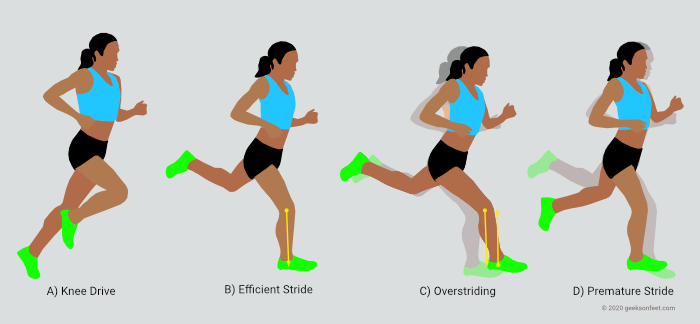
A well-positioned lower leg allows your ankle, knee, and hip to work together to absorb impact and generate energy. If the shin angle is too far forward or backward, this movement sequence may become less efficient.
Your Feet
There’s no single correct way for your feet to strike the ground, as everyone’s natural running style is different. The important thing is to use your feet actively to push off rather than simply lifting them.
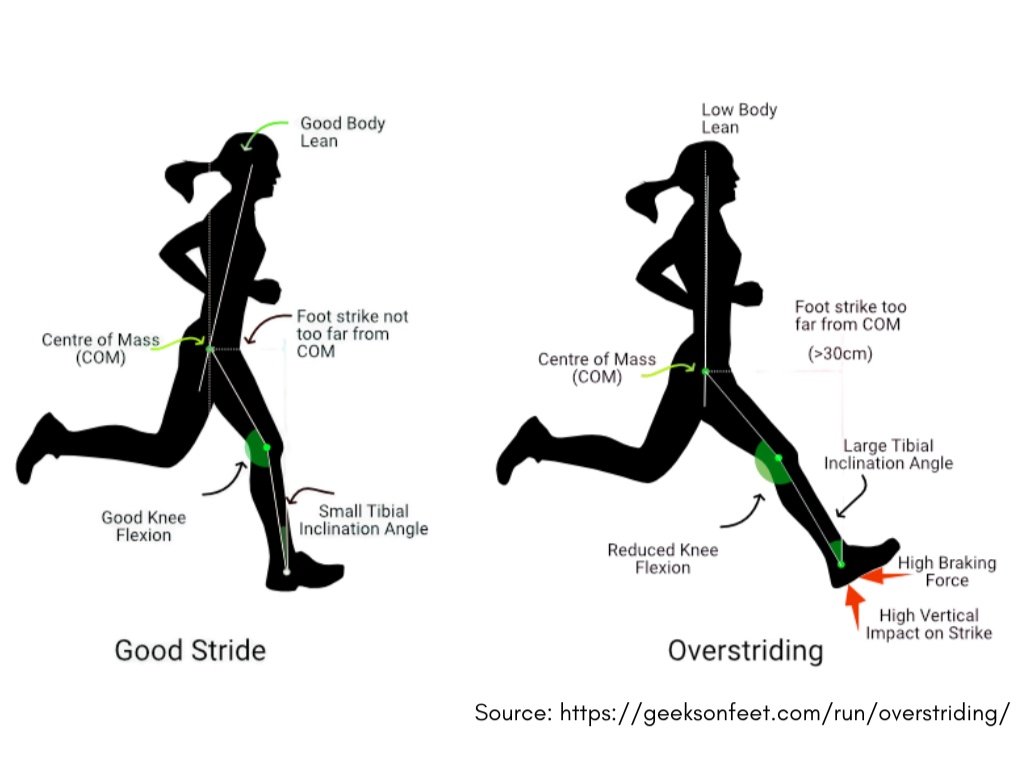
A midfoot strike can help you move forward efficiently and prevent your stride from reaching too far ahead of your body. However, if you naturally land on your heel or forefoot, there’s no need to force a change.
Instead, focus on finding running shoes that suit your feet and running style. The right level of cushioning and support can help you run comfortably and reduce the risk of injury.
How Your Running Form Changes on Hills
Your running form should adjust with the terrain. As the slope changes, aim to keep your body aligned with the running surface by adjusting your trunk and hip position.
Running Uphill
When running uphill, keep your posture tall and avoid hunching forward. Gently move your hips forward to help generate power. Shorten your stride, lift your knees slightly higher, and use your arms more actively to share the workload.
Instead of staring at the top of the hill, keep your gaze around 6–10 feet ahead. This can make the climb feel more manageable and help you maintain a steady posture.
Running Downhill
On descents, avoid leaning too far forward or using your body to brake. Let gravity help carry you downhill while keeping your nose roughly over your toes and your shoulders relaxed.
A controlled, light stride can help reduce unnecessary braking forces and limit extra stress on your knees.


Leave a comment
This site is protected by hCaptcha and the hCaptcha Privacy Policy and Terms of Service apply.