













![[2 Pack] Coospo Breathable Neck Gaiter Face Scarf Mask COOSPO](http://www.coospo.com/cdn/shop/files/106de7b046babc03aa610173af6e31aa_599da3fe-9907-4b1e-8eb0-f08b3032720b.png?v=1720591174&width=1600)


![[4 Pack] Coospo Soft Breathable Chilly Towel, Microfiber Towel COOSPO](http://www.coospo.com/cdn/shop/files/1_904094cc-62ee-40e9-aa21-415effb385b4.png?v=1720527561&width=1600)

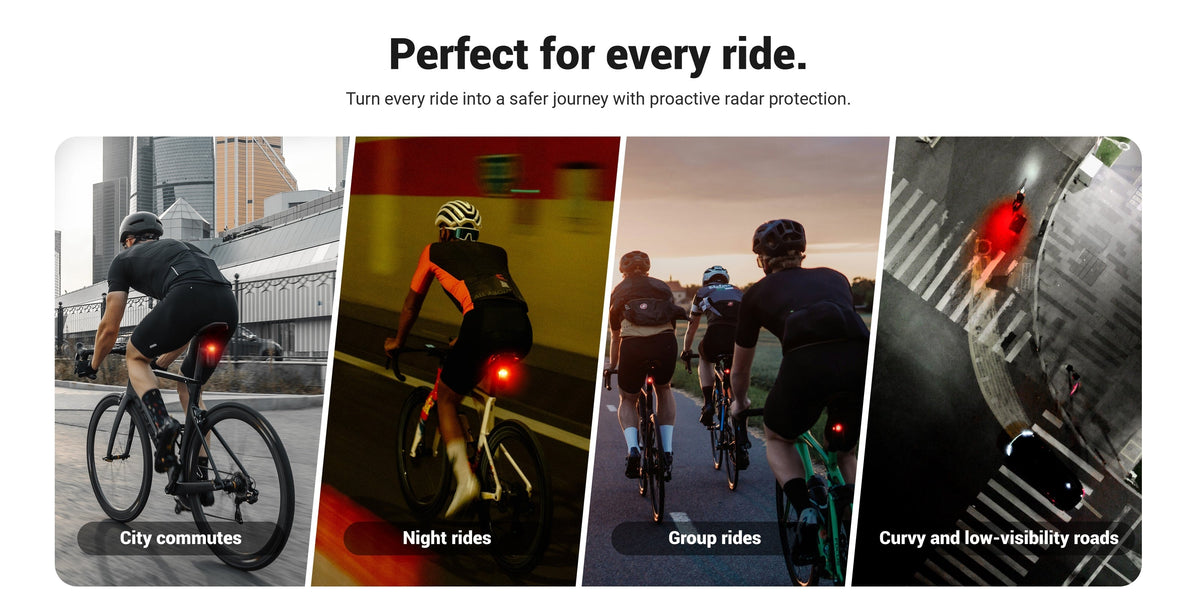
Os ambientes para ciclismo podem parecer completamente diferentes dependendo de onde você pedala.
O trajeto diário para o trabalho na cidade costuma ser repleto de semáforos, cruzamentos congestionados, carros estacionados e movimento constante. Enquanto isso, as estradas rurais podem parecer mais calmas e tranquilas, mas frequentemente apresentam outro tipo de desafio: veículos mais rápidos, estradas mais estreitas e trechos mais longos com pouca proteção para ciclistas.
Ambos os ambientes apresentam riscos, mas a experiência de pilotagem muda drasticamente dependendo das condições da estrada ao redor.
É por isso também que cada vez mais ciclistas estão começando a usar luzes traseiras com radar em vez de depender apenas das luzes traseiras piscantes tradicionais.
Uma lanterna traseira com radar não apenas torna os motociclistas mais visíveis, como também os ajuda a ficarem atentos aos veículos que se aproximam por trás, adicionando mais uma camada de alerta durante a pilotagem.
Mas será que uma luz traseira com radar faz mais diferença no trânsito intenso da cidade ou em estradas rurais abertas?
A resposta depende do tipo de pilotagem que você pratica, pois as ruas urbanas e as estradas rurais criam pressões muito diferentes para os ciclistas.
Andar de bicicleta na cidade: atenção constante no trânsito intenso.
Para muitos ciclistas, o deslocamento diário na cidade é mentalmente exaustivo.
Os ciclistas urbanos estão constantemente processando informações:
semáforos
Pedestres
Ônibus e táxis
carros estacionados
Veículos em curva
Interseções
entregadores
Mudanças repentinas de faixa
Mesmo em trajetos curtos, o ciclismo urbano exige esforço contínuo. attention.One Um dos maiores desafios ao andar de bicicleta na cidade é a enorme quantidade de distrações simultâneas. Os ciclistas frequentemente precisam verificar os espelhos retrovisores, monitorar as condições da via, observar os semáforos e ficar atentos aos veículos que se aproximam por trás — tudo isso em um curto espaço de tempo. seconds.This É aí que uma lanterna traseira com radar pode mudar significativamente a experiência de pilotagem. Em vez de virar a cabeça repetidamente para verificar se há carros se aproximando, o sistema de radar emite alertas quando veículos são detectados atrás de você. Isso permite que os motociclistas mantenham o foco na estrada à frente, sem deixar de estar informados sobre o tráfego atrás de você.
Em condições de tráfego intenso, reduzir as verificações desnecessárias por cima do ombro pode tornar a pedalada mais tranquila e menos estressante. Muitos ciclistas subestimam o quão exigente mentalmente é pedalar na cidade. Após longos trajetos, a fadiga não vem apenas do esforço físico — ela também da constante tomada de decisões e da atenção ao ambiente.

Uma lanterna traseira tipo radar ajuda a reduzir parte dessa carga mental.
Por exemplo, em trânsito lento, os ciclistas muitas vezes precisam mudar de faixa ou se posicionar com segurança antes dos cruzamentos. Saber se há veículos se aproximando por trás pode ajudar os ciclistas a fazer essas manobras com mais confiança.
O trânsito urbano também é imprevisível. Um carro pode acelerar repentinamente após um sinal vermelho, um ônibus pode invadir a ciclovia ou um motorista pode tentar uma ultrapassagem rápida em um espaço limitado.As lanternas traseiras tradicionais melhoram a visibilidade, mas não informam aos motociclistas o que está acontecendo atrás deles. O radar muda isso. dynamic.Rather Mais do que simplesmente serem vistos, os motociclistas ficam mais informados sobre as condições do trânsito ao redor.
Estradas rurais: estradas mais tranquilas, riscos de alta velocidade
À primeira vista, as estradas rurais podem parecer mais seguras do que as ruas movimentadas da cidade.
Há menos cruzamentos, menos congestionamento e, frequentemente, mais espaço aberto. Muitos ciclistas apreciam pedalar em áreas rurais porque o ambiente é mais tranquilo e agradável. relaxing.However, Andar de bicicleta em áreas rurais apresenta outro grande desafio: a velocidade do veículo.
Os carros em estradas rurais costumam viajar muito mais rápido do que os veículos em áreas urbanas. Em algumas situações, os motociclistas podem ter apenas alguns segundos para reagir antes que um veículo os atinja por trás.
Isso é especialmente verdade em relação a:
Ruas estreitas sem ciclovias
Colinas onduladas com visibilidade limitada.
Estradas com curvas acentuadas
Áreas com pouca iluminação
Longos trechos isolados sem semáforos
Ao contrário do trânsito urbano, onde os motociclistas estão constantemente à espera de veículos próximos, as estradas rurais podem criar uma falsa sensação de segurança. Os motociclistas podem passar vários minutos sem ver um carro e, de repente, deparar-se com um veículo em alta velocidade a aproximar-se por trás. Essa diferença de velocidade faz toda a diferença.
Um veículo em alta velocidade reduz a distância muito mais rapidamente do que a maioria dos ciclistas percebe. A percepção antecipada torna-se extremamente importante, especialmente quando os ciclistas precisam de tempo para ajustar a posição na faixa ou se preparar para ultrapassagens. É aí que os sistemas de radar se mostram particularmente eficazes. valuable.Instead Ao detectar um carro se aproximando no último segundo, os usuários recebem alertas antecipados que lhes permitem reagir mais cedo e com mais calma.

Em estradas estreitas, esse tempo extra de preparação pode fazer uma diferença significativa.
Por exemplo, os ciclistas podem optar por:
Mantenha uma linha mais firme
Evite movimentos bruscos
Mova-se ligeiramente em direção ao ombro.
Atrasar a virada ou o reposicionamento
Prepare-se mentalmente para veículos que passam perto.
A experiência parece menos reativa e mais controlada.
As estradas rurais também costumam ter menos iluminação pública e menor visibilidade, especialmente no início da manhã ou no final da tarde. Nessas condições, combinar uma luz traseira potente com o uso de radar proporciona visibilidade e suporte à detecção.
Para quem anda sozinho, essa maior consciência situacional pode ser especialmente útil em viagens de longa distância, onde as condições da estrada mudam constantemente.
Estradas diferentes, níveis de estresse diferentes ao pilotar
Um aspecto interessante das lanternas traseiras com radar é que elas resolvem problemas diferentes dependendo do ambiente de pilotagem.
Nas cidades, o maior problema costuma ser a sobrecarga de informações.
Há simplesmente muita coisa acontecendo ao mesmo tempo. Os motociclistas precisam dividir a atenção entre veículos, pedestres, cruzamentos, navegação e perigos na estrada. Uma lanterna traseira com radar ajuda a simplificar uma parte dessa experiência, melhorando a visibilidade traseira sem exigir que os motociclistas fiquem constantemente olhando para a frente.
Em estradas rurais, a questão não é tanto a densidade do tráfego, mas sim a velocidade e o tempo de reação.
As estradas podem parecer mais tranquilas, mas os veículos que se aproximam costumam chegar muito mais rápido. O radar ajuda os motociclistas a se prepararem com antecedência, em vez de reagirem tarde demais.
Em outras palavras:
Andar de bicicleta na cidade gera pressão mental.
Andar a cavalo em terrenos rurais cria pressão relacionada à velocidade.
Ambas as situações se beneficiam de uma maior conscientização, mas de maneiras diferentes.
É por isso que muitos ciclistas que começam a usar luzes traseiras com radar dizem que a experiência de pedalar se torna mais relaxante no geral — não necessariamente porque as estradas se tornam mais seguras da noite para o dia, mas porque os ciclistas se sentem mais informados sobre o que está acontecendo ao seu redor.
Então, qual ambiente traz mais benefícios?
Provavelmente não existe uma única resposta correta.
Alguns motociclistas podem achar que o radar é mais importante em estradas rurais devido às velocidades mais altas dos veículos e ao tempo de reação limitado. Outros podem argumentar que o deslocamento urbano se beneficia mais porque o tráfego é constante e mentalmente mais intenso. demanding.In Em ambas as situações, o radar altera a condução, melhorando a percepção da traseira de maneiras que as luzes traseiras tradicionais não conseguem proporcionar sozinhas.
Considerações finais
Andar de bicicleta sempre exigirá atenção, concentração e tomada de decisões rápidas — seja pedalando por ruas movimentadas da cidade ou por estradas rurais tranquilas.
As luzes traseiras tradicionais ajudam os ciclistas a se manterem visíveis, mas as luzes traseiras com radar adicionam outra dimensão ao ciclismo, ajudando os ciclistas a se manterem informados sobre o tráfego que se aproxima.
É claro que o radar não substitui a atenção do ciclista ou hábitos seguros de ciclismo. Os ciclistas ainda devem verificar os arredores e pedalar com segurança. cautiously.But O radar pode servir como uma ferramenta adicional de conscientização que auxilia na tomada de melhores decisões na estrada.


Leave a comment
Este site está protegido pela Política de privacidade da hCaptcha e da hCaptcha e aplicam-se os Termos de serviço das mesmas.