









































Why Increasing Your Running Mileage Too Quickly Can Lead to Injury
A new season, an upcoming race, or an exciting training plan can make you eager to run more often and cover longer distances. However, increasing your mileage too quickly can raise your risk of injury and force you to take an unwanted break from running. Understanding the common risk factors can help you build your training volume more safely.
Running involves repetitive movements, placing repeated stress on the same muscles, tendons, ligaments, and bones. Beginners may not know how to increase their mileage properly, while experienced runners chasing faster race times may try to build their training volume too quickly. Both can lead to overtraining and injury.

Increasing your training load too quickly doesn't just mean running more miles. It can also involve adding speed or intensity before your body is ready, or increasing both distance and intensity at the same time.
Another important factor is that your cardiovascular system often adapts to training faster than your muscles, tendons, ligaments, and bones. You may feel fit enough to run a longer distance, but your body's supporting structures might not yet be prepared for the repeated impact. This gap between cardiovascular fitness and physical adaptation can increase injury risk.
Gradually increasing your mileage is essential, but even runners who follow a structured training plan can still get injured. Several other common risk factors may also play a role.
Predictors of Running Injury Risk When Increasing Mileage
1. Running Form Issues
There is no single perfect running technique, but certain movement patterns can increase injury risk. Running involves thousands of repeated steps, so even small increases in joint stress can accumulate over time and eventually exceed the body's ability to handle the load.
One common issue is overstriding, which happens when the front foot lands too far ahead of the body, often with a hard heel strike. This increases braking forces and places additional stress on the knees, potentially contributing to runner's knee and shin splints.
Excessive vertical movement is another concern. Runners who bounce too much with each step may use more energy and create greater impact forces, increasing stress on their joints and tendons.
Hip drop can also occur, particularly when runners become tired during longer sessions. This happens when the pelvis drops on the opposite side of the supporting leg, often due to weak hip stabilizing muscles, especially the gluteus medius. It can contribute to IT band pain, outer knee discomfort, and Achilles tendon problems.
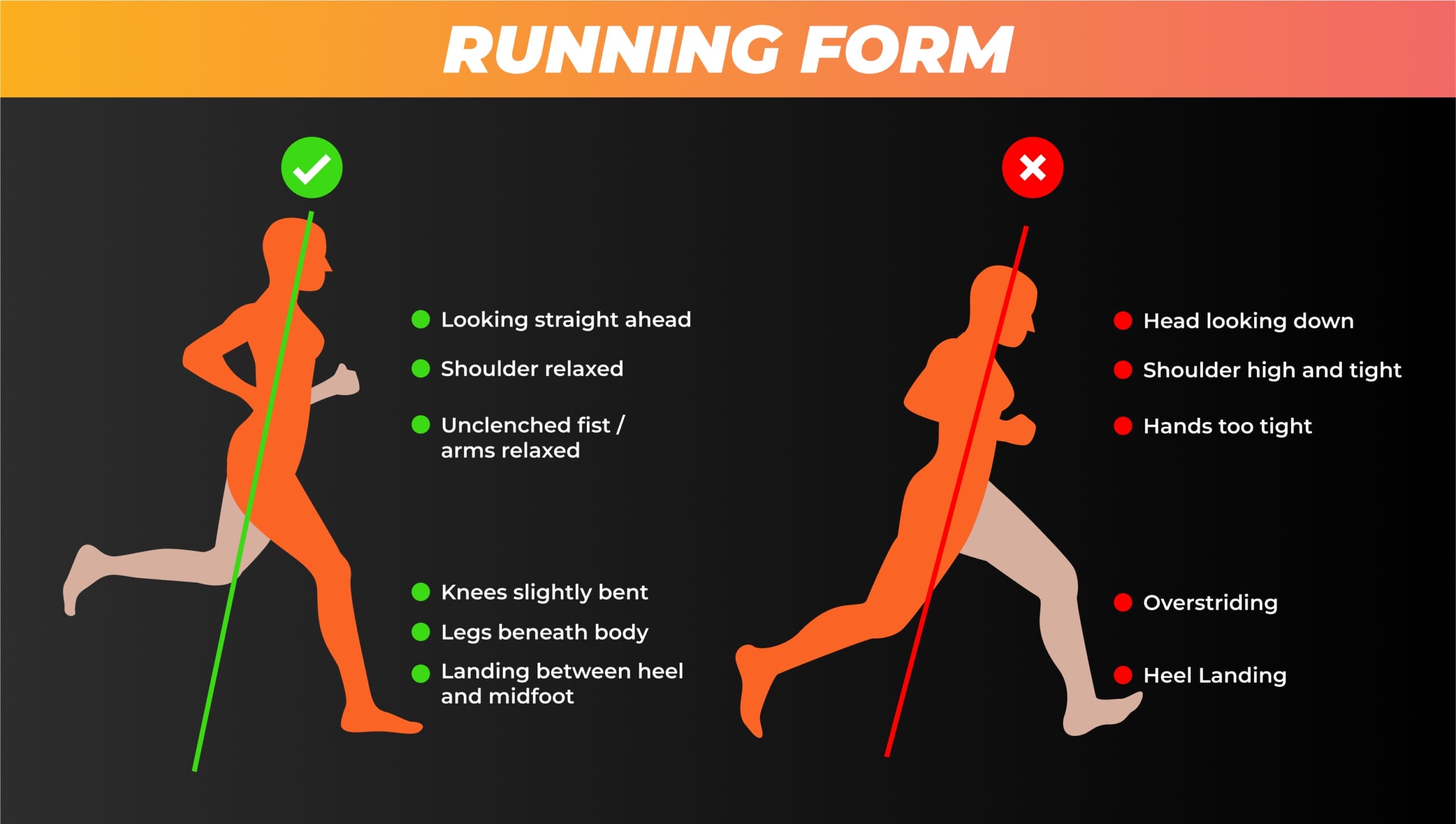
To improve running mechanics, focus on building strength, particularly in the glutes and hip stabilizing muscles. Exercises such as curtsy lunges and side-lying leg lifts can help. Slightly increasing running cadence may also improve movement efficiency. However, major changes to running form are not always necessary unless there is a specific issue to address.
2. Not Getting Enough Rest
What you do between runs is just as important as your training itself. Poor sleep and insufficient recovery can increase the risk of running injuries.
Your body needs time to repair and adapt to training. During sleep and rest days, muscles recover, bones become stronger, and connective tissues gradually build resilience.
Adults are generally recommended to get at least seven hours of sleep per night. However, people who exercise regularly may need more, with around nine hours being a useful target for better recovery.
Active recovery days are also important. Rather than staying completely inactive, try low-impact activities that work different muscle groups and reduce stress on your running muscles. Swimming, using an elliptical machine, or cycling on a stationary bike are good options.

For runners who train five days a week, a practical approach is to include one active recovery day and one complete rest day. This gives the body enough time to recover and adapt to the training load.
3. Not Fueling Your Body Properly
Focusing only on running mileage and training intensity can make it easy to overlook nutrition. However, getting enough energy and nutrients is essential for muscle recovery, bone health, and injury prevention.
Research has linked inadequate calorie and fat intake to a higher risk of injuries, particularly among female runners. Low fibre intake has also been associated with increased injury risk.
To support your training and recovery, pay attention to what you eat before, during, and after running:
- Before a long run: For sessions lasting over 60 minutes, aim for around 50–90 grams of carbohydrates beforehand.
- During a long run: Consume approximately 30–120 grams of carbohydrates per hour, adjusting the amount based on workout duration, intensity, body weight, and personal needs.
- After a run: Include both carbohydrates and protein to replenish glycogen stores and support muscle repair. A meal with a carbohydrate-to-protein ratio of around 4:1 is one option.
Proper fueling helps your body handle training stress and recover more effectively.
Monitor Your Heart Rate to Manage Training Intensity
Managing your training intensity is just as important as getting enough rest. A heart rate monitor can help you understand how hard your body is working during each run. By tracking your heart rate and training zones, you can better distinguish between easy runs and high-intensity sessions, avoid pushing too hard too often, and make more informed training decisions.

A reliable heart rate monitor, such as the COOSPO HW9 armband heart rate monitor or H808S chest strap, can help you track your heart rate throughout your workouts and better understand your training intensity.
4. Previous Injuries
A history of injury is one of the strongest predictors of future running injuries. For example, runners who have previously experienced an ankle sprain or hamstring strain may be more likely to injure the same area again.
This is partly because previously injured tissues may have a lower tolerance for physical stress, making them more vulnerable when training loads increase.

To reduce the risk of recurring injuries, include targeted strength training and mobility exercises in your routine. Focus on strengthening areas that have been injured before. For runners with a history of hamstring problems, exercises such as deadlifts, kettlebell swings, and hamstring curls can help build strength and support better injury prevention.



Laisser un commentaire
Ce site est protégé par hCaptcha, et la Politique de confidentialité et les Conditions de service de hCaptcha s’appliquent.